- I'd gotten rid of trolls in my campaign, but then I got to thinking, maybe make 'em like a yeti-sasquatch-abominable snowman thing? Could just call 'em "abominations". "Snow abomination" = frost troll, maybe. Apparently the main Nepali name, himamaanav, just means "snow man" (they may well call the child's ice-sculpture something else, like "snow Bodhidharma"); one of the Tibetan names, meaning "wild man", is "mi-go". How exactly Lovecraft managed to equate the two is a question for the ages.
I never much cared for the troll social behavior as presented starting I think in 3rd Edition (at least I don't remember any mention of troll matriarchs back in 2nd). Think mine'll be more like certain reptiles, which lay their eggs and then their young are on their own. Nobody ever said trolls don't lay eggs, and none of the rest of their behavior seems to go with K-selection. How do trolls without "adult supervision" not overrun an ecosystem? Young ones can get eaten by big predators—stomach acid stops their regeneration. - It occurs to me that having a glowing iris but a dark pupil, combined with sclera having the same appearance as the iris—the norm for non-human animals—would give you the "whole eye glows" glowing eyes seen in Warcraft. Especially if you also have it so the pupil completely seals shut and the iris and sclera are the receptor for whatever energy darkvision perceives? Maybe darkvision is something like a parietal eye or the heat-sensing "pits" in a pit-viper or a vampire bat, but built into the outer surface of the eye rather than a separate organ. And sensing some weird magical energy (or maybe radar, which is honestly the thing most like how darkvision behaves, but if you can see your surroundings by passive radar on a planet's surface, you live in a very odd environment).
My fiends also all have three eyes, and the third is the one that gives them see-in-darkness and an at-will deathwatch ability. I was also toying with doing something weird with dragon eyes. One that was basically automatic was comparable visual acuity to a bird of prey (de rigueur for a flying predator—and presumably pretty easy to accomplish when your eyeball is the size of a shot-put ball), but then I thought maybe two pupils so they can do parallax-based depth perception from a single eye? But then, even better, was monocular depth-perception via "corneal accommodation", like a chameleon. After all, sub in the breath-weapon for the chameleon tongue and you've got a dragon. Presumably they don't put the eye on a turret the way chameleons do (since their head is a lot more mobile than a chameleon's). - Decided to use a river otter, specifically the giant river otter, as the model for dragon anatomy. A 120-foot dragon is about 15.24 times the dimensions of the otter; an otter that size would weigh just under 125 short tons. Using the density of a (very light) bird as against a mammal (602 kilos per cubic meter vs. 1,080, i.e. 55.7% the density), that results in a body-weight of a mere 69.6 tons. I'm too tired to compute the flight mechanics; realistically you'd probably have to model it as a non-biological ornithopter anyway. A cheetah-like sprint before takeoff can still probably meet the case with some fudging.
One thing that occurred to me is, if you've got wings on your back, you have a second pair of shoulder-blades. And probably a second clavicle, too. If a dragon moves through the air like a cross between the swimming motions of a penguin and an otter—weren't those in Avatar: The Last Airbender?—it's going to need a lot more range of motion than the "swinging forward and back" motions found in the animals that lack clavicles, like certain carnivorans (I think mainly cursorial ones like canids and some hyenas?). Actually it'd probably be more like a wishbone ("furcula" is the formal term), since it's for flapping.
I don't know why I had been thinking a dragon with two wings as well as hind- and forefeet would require a keelbone on its back; all it would need is a second collarbone (or rather a wishbone), lower down than tetrapods have them. Maybe the forelegs attach like normal quadruped limbs, while the wings attach like bird-wings (or human arms) do. Then partway down the ribcage changes to become like that of a bird, with a "keelbone" from part of the sternum (still think dragon sternums are built more like vertebrae, with long crests except on the bottom instead of the top, than like a normal sternum). Is the wishbone stuck in the middle of the ribcage? Or does it loop around it? Huh. - I mentioned that elves' composite bows, in my setting, are actually cable-backed bows (except to strengthen good materials further, not make weak materials serviceable). I decided, since I'd wanted elves' bows to be compound but it didn't really fit with them (maybe gnomes or dwarves but elves don't have pulleys on the ends of their bows, it's just not in the picture), that elves use a double bow or father-and-son bow, also known—in our world, obviously, not theirs—as the Penobscot or Wabenaki bow.
It's basically a recurve bow with a second, smaller bow (usually a flatbow not a recurve one) attached to the front and facing the other way. The string passes through the ends of the larger bow and attaches to the ends of the smaller one. I don't really understand the mechanism but I've seen people compare it to a compound bow, though more because of its "smooth" draw than that you can necessarily hold it at full draw quite so easily. Think maybe just give it 10 feet of range on the composite longbow, like the composite longbow has on the regular one.
Apparently there's also a thing called a "string silencer" for bows, basically a pom-pom/tassle type of thing, or an actual ball of fur, woven into bowstrings. It silences the shot (important especially for deerhunting, in the real world) by absorbing the residual kinetic energy of the release, and basically dividing it up into the various parts of the pom-pom/hairs of the fur-scrap. Some of them are X-shaped or little hooks, instead, but it's all roughly the same idea. - Know a word I hate? "Folk." I particularly loathe how it's used in d20-family RPGs. "Lizardfolk", "merfolk", "serpentfolk"—I keep wanting to say "You don't have to talk in that stupid voice to me, I'm not a tourist." The word's just so forcedly Ye Olde. A much better word? "People". I come from a place where "people" is an actual term used in these ritual-myth types of contexts ("Holy People," "People of Darkness," "Antelope People," etc.)—and it doesn't require adopting some rural British accent to pronounce the word like you're serious.
Another good word is "thing"; I don't know where people got the idea that that word is somehow a sign of bad writing. I especially don't know why the d20 RPG-writers don't understand how inherently evocative it is, given "crypt thing" (and, with Pathfinder's questionable inclusion of Cthulhu Mythos stuff, "elder thing"). I decided to call my lizard-people "scaled things", at least most of the time—maybe "lizard people" ("scaled people"?) to their faces? My troglodytes and kobolds (two branches of the same race) are collectively "cave things"; my sahuagin are "tide things". - Not directly RPG-relevant but certainly can come up in them, people always complain about peasant heroes being able to hold their own in combat. Now, while there are things they certainly shouldn't know right off (how to use a shield most effectively, how to move in armor), how to swing something shaped roughly like an agricultural tool isn't one of them. Also, they would probably be familiar with whatever's used for hunting in their society. Bans on hunting actually only appeared in Western Europe in the mid- to late 1400s (they wouldn't have been an issue in the putative life of any of the several people who went to make up the legend of Robin Hood). Even then they were mostly limited to "King's Land"; before that anyone could hunt anywhere they weren't trespassing just by being present. Remember, the Confederacy didn't have to train its sharpshooters: they were a bunch of backwoods boys who'd grown up shooting squirrels for the family stew-pot—Union soldiers are markedly easier targets. No reason your peasant hero shouldn't know his way around the shortbow.
- Decided to slightly retool my nonhuman names, mostly so I could make a table that produces a large number of them (because the humans' being named from the calendar results in 465 possible names, 36-37 "day signs" plus the 1-10 single-word number-names times 10 "year-tithes"). It just took a slight modification of elves' and dwarves' two-part names, but I'd had gnomes be named single adjectives: which would mean having to come up with over 300 individual adjectives. Decided instead to give 'em "action plus adverb" two-part names. The rest of their naming still works similarly.
Decided that elves don't exactly have clans, as such, but just give the name of the ancestral grove or tree of their parent of the same sex. (How come "boys are in father's line, girls are in mother's" isn't more common? I can't even find one example of a society that uses it.) All the ancestral trees and groves on the planet originally grew on the Silver Moon; the trees came with them when they left. Of course, most of the time an elf just gives their two- or three-part name, personal name, the name derived from both parents, and the name derived from the spouse's if married (actually I think that last one is a middle name). I'll eventually come up with tables for the grove names, and gnome epithets and dwarf clans.
Eventually I'll come up with tables for the NPC races, too. Dark elves and goblin("oid")s use modified elf names, ogres/orcs and dark dwarves use modified dwarf names, and kobolds/troglodytes and spriggans use modified gnome names (except the kobold/troglodyte ones are in Undercommon). That still leaves giant names, though, which I also have used by hyena-, cat-, and yak-people. - Somewhat relatedly (and relevant to fantasy games because they're if anything more beholden to Tolkien than fantasy literature is), I think I've mentioned that at least part of Black Speech, in Tolkien, is pidgin Valarin (nazg "ring" appears to be from nashkad, for instance). The interesting thing about that, I think, is that by all indications what Sauron did to create it was make it less harsh-sounding—remember, the thing the angels always open with, in the Bible, is "be not afraid". The Eldar found it physically unpleasant to speak Valarin (hence why the Valar mostly use Quenya with them); it's possible other beings, not being as robust as the Eldar, might even find it physically dangerous—"our ejective consonants cause tissue trauma," say.
2018/04/08
Playing with Fantasy VII
Fantasy RPG thoughts.

2018/03/26
Sierra and Two Foxtrots V
Fantasy and SF thoughts. Mostly the former because it's a broader subject and I've been working on my Pathfinder setting.
- Decided to go with two-tiered elf and gnome equipment. The ordinary stuff is just equivalent to masterwork steel, wood, or leather, with the Sunder resistance of a curve blade and weapons also having the curve blade's Weapon Finesse eligibility. Maybe they weigh only 75% as much? And then the high-end stuff is mithral or darkleaf cloth (in terms of hardness and hit points), except you can make "wooden" shields, and still with the Sunder resistance and Weapon Finesse eligibility. Dwarf stuff would just be like mithral or three-quarters-weight masterwork steel, respectively—but still made from extremophile coralline algae. (I don't think dwarves will have a darkleaf cloth equivalent.)
Don't know how to price 'em. Figure that maybe the simplest way to price the "mithral"/"darkleaf cloth" weapons is "base plus alchemical silver (or cold iron, in the dwarf-stuff's case), plus masterwork plus 10 gp per pound of base weight" ("half weight" being the only benefit darkwood offers beyond masterwork, to a weapon). And then have the armor cost what mithral normally does. The steel(-equivalent) should probably be just masterwork? Plus 5 gp per pound since it reduces the weight half as much as darkwood would. We're ignoring the Sunder resistance in pricing, because there's no one weapon that's equivalent to a curve blade that we can say the curve blade is the modified form of.
I think gnome "mithral" weapons won't overcome damage-reduction, so maybe theirs just cost base plus masterwork plus 10 gp per pound of base weight. - I'd had zled spaceship and aircraft autocannons use the metric-patching system, but decided that was still too easily miniaturized; now they only use it for engines and launch-catapults, and use electromagnetically accelerated autocannons (quench guns, I think—a type of Gauss/coilgun). The khângây already use quench vulcans as personal small-arms (not as practical as lasers but the zledo are the soldiers, khângây are artists and artisans and thus more prone to going by the Rule of Cool).
It occurs to me that the easiest way to do ammo for mass-driver weapons is to use iridium or osmium bullets, with a "driving band" of ferromagnetic material. In the space ones they're spherical, since there's no aerodynamic concerns, and have "driving spots" something like the dimples on a golf ball; the ones for use in atmosphere are shaped as Sears-Haack bodies with the "driving band" around the middle. I think the atmosphere ones have the coil set up to impart spin like a rifle, too.
Think zled artillery, too, will mostly be mass-driver based—maybe some lasers for ground- and air-applications. Their missiles, I think, only use metric-patching in space; I'm not sure what their ground propulsion is. Probably some superconducting electric ducted fan, but maybe pulse detonation engines. Which work the same as other jet/rocket engines except that those use deflagration, combustion at subsonic velocities, while detonation is combustion at supersonic velocities—basically a conventional-explosives Orion drive. Yes, they're very loud. - Zled air-travel, I decided, is accomplished using vacuum-airships for short flights and some sort of electric turbine flight for long flights. A vacuum airship is quite simple: you make the envelop lighter-than-air by pumping the air out. You land by just pumping air back in. It's hard to do without extremely airtight envelopes, of course, but given they're a spacefaring civilization they can store hydrogen, so that's not an issue.
The other issue is that if a vacuum cell gets a puncture, the whole thing implodes; they get around it by using a compartmentalized structure that avoids chain-reactions, and making the cells out of very durable smart materials. Their airships are also aerodynamic, so they can glide to a landing if they lose the vacuum cells; the outer hull and inner envelope aren't directly in contact. - Not going that route myself, but if you wanted to get rid of verbal components for spellcasting—like if you wanted to make it more like the video-games that are the main source of current fantasy preconceptions nowadays (although canonically most of those do have spoken spells, it'd just get annoying to hear over and over)—you could use a modified version of the psychic magic from the Pathfinder Occult Adventures. What I'd do is still have somatic and material components, but replace verbal with thought components for wizards and emotion components for sorcerers. I would leave divine spellcasters with verbal components, though, since they still pray. I think witches, too, since their personal relationship with their shadowy patrons is fundamental to that class's "flavor".
I also think that, if you're going to work out (e.g. for fluff-text) how incantations work, the arcane casters should use very different types of spells from the divine ones. Weird and abstruse is the way to go for the arcane ones; think of the spells in Bleach, for example (which I think are based on the real chants sometimes used in onmyôdô). Stuff like "Scattered beast bones! Spire, crimson crystal, steel wheels! The wind if it moves, the sky if it stops, the tone of the spear striking fills the lone castle!" Meanwhile the divine casters (and witches) should probably have more Slayers-like incantations, since they're invoking powerful beings like in that setting. The same spell might thus be "O source of all power, O thunder that roams the sky, gathering in my hand, become a power!"
Of course a lot of the time those might be shortened to, say, "Hadô 63: Raikôhô!" or "Dig Volt!" (Or "What I seek is thunder: Izuchi!") - Apparently opioids don't work on reptiles. Or not the same; they have an effect, but instead of sedating them and numbing them, opioids make reptiles agitated and cause them to increase their body-temperatures (I think by the same means certain lizards and snakes do it, during the mating/brooding season). Presumably related to us and diapsids using some different nerve-channels (see also capsaicin).
This is (of course) an issue for vets who have to treat injured reptiles; it's also potentially of use to SF writers. Or fantasy, which has been rife with reptile-people back at least to the Kull stories and Pellucidar (I consider Hollow Earth—also Sword and Planet—to be fantasy). The cultural associations of opium—opium dens, the Opium Wars, etc.—work pretty well with something like the Serpent People, for example. - Revised my dragons slightly: their necks and tails have featherlike-scales that spread out in flight to form a wing that almost makes them kite-shaped. (They might have a "mane" running almost their whole length when on the ground, in other words—maybe they have a double fan of the scales on the middle of their back, to act like vertical stabilizers.) They also undulate, vertically, through the sky, like the motion an otter makes when swimming, in order to "flap" with their entire length. Part of this was inspired by the Revered Dragons in Skyrim, whose necks and tails are lined with "fins" that would drastically increase their lifting area.
- Thought I might go with 5e's darkvision, and give it to all my nonhuman races except the animal hybrids (cat-, hyena-, and yak-people), which I think have 3e low-light vision. Where 3e/Pathfinder darkvision is basically immune to darkness, 5e treats poor light as normal light and total darkness as dim light. (For those playing along at home, dim light means that creatures have concealment, imposing a 20% miss-chance on attacks against them, and can use the Stealth skill to, as 'twas known in the Before Time, "hide in shadows".) Low-light vision is kinda meh, but 3e darkvision seems slightly OP. 5e's seems to be a good compromise.
Relatedly (in my day your eyes glowed red when you used the equivalent of darkvision), I mentioned before how glowing eyes would probably make your vision blurry (the night-vision of animals with tapeta lucida is blurry). I proposed a mere ring around the iris, for glowing robot eyes. Maybe for humanoid eyes you only need to have the pupil black? Most glowing eyes (e.g. Warcraft elves) are a solid color, with no pupils (probably the pupils glow as an inappropriate analogy with the tapetum lucidum), but that has got to be artistic license. Something more like the Awoken, in Destiny, who have glowing irises but black pupils, is more plausible. - I like to think about the basic day-to-day technology of my future society. For example, they affix things to other things using "seta-tape"—"setae" being the bristles on the underside of a gecko's feet that let it walk on walls. Basically it's an adhesive that leaves no gunk. A tokay gecko's feet can support 2.05 kilos of weight, something like 40 times its body-mass; presumably if you have to attach something bigger than that, you just use more tape. And, again, no gunk—you just move the taped object in a certain way relative to the surface it's stuck to, and it comes off, like a gecko taking a step.
2018/03/02
Playing with Fantasy VI
Fantasy game thoughts, mostly (as I've been working on my setting a lot lately) of the icosahedral variety.
- Was working on writing-systems for my D&D/Pathfinder setting. Realized, a good "hook" for things like that, is to use a shape in most of your characters. I use circles and parts thereof, in various sizes, in my elvish one; rectangles in my dwarvish one; and am probably going to go with triangles in the gnomish one I'm still working on. I also have a dark-elf version of elvish that uses triangles instead of circles (yes "pointier is shorthand for evil"—maybe "bouba and kiki" works for elves too). Based my elvish and dwarvish scripts' numbers on the fact they use base-12 and count on their knuckles; will incorporate the fact gnomes use base-20 into theirs, but I haven't worked out, yet, how I'll convey that they're counting on their toes, too. (Just now decided giants will use a square-y script, with a different basis than dwarvish, and have base-8 numbers, from counting on the gaps between fingers.)
Kind of thinking my fiendish writing should be reminiscent of the symbols from Dead Space, and Hive runes from Destiny, but the thing there is that I also have my celestials and elementals use the same language. Maybe something like the elf/dark-elf versions of elvish? (Goblins, being mutant elves, also use a degenerate form of elvish—I think with the circle or triangle replaced by "slash marks" in some way?; ogres and orcs likewise use degenerate dwarvish, since they're mutant dwarves.) I also think my "undercommon", which in my setting is primarily the language of subterranean reptiles like kobolds and serpent people—and has a dialect spoken by aquatic things like sahuagin—will look a bit like Dwemeris, from Elder Scrolls, except the aquatic version will look more like Falmeris. (Seriously look at it, Falmer writing looks like the Deep Ones use it to write their prayers. And not the "Deep Ones" who blinded and enslaved the Falmer.) - Putting bugbears back in my setting, as something like "noble" goblins (which would make goblins "common" and hobgoblins "elite"). Or come to think of it a four-way division, with barghests as the top. "Low, middle, high, great," like the field-officer ranks of the People's Liberation Army? (Okay that's actually "small, middle, high, great.") "Lesser, common, high, great?" Then again barghests aren't mundane goblins; maybe something more like "lesser, common, high or great, holy." ("Minor, major, ultra, zealot"?)
Thought I might have the bugbears go back to being chaotic evil, and the goblins neutral evil; the drow had a strict religious code and yet were chaotic evil, after all (at least in 1st and 2nd Edition, 3rd and 5th made them neutral evil possibly because their strict code seemed un-chaotic—but Pathfinder put them back as chaotic). Went only partway in that direction, though; the hobgoblins and barghests are lawful evil, the goblins neutral evil with lawful tendencies, and the bugbears straight neutral evil. Basically as the elite of goblins the bugbears just form smaller groups and tend to be more self-indulgent—a strict code for hunting your human sacrifices doesn't really require you be lawful across the board, after all.
Interestingly, if I make bugbears as much bigger than my goblins as the ones in the Pathfinder core rules are bigger than their goblins, the males wind up being Large—over eight feet tall. (The females are still Medium, because my setting's goblins have feline-like sexual dimorphism.) Decided both sexes of bugbear go on the ritual hunts; the females have goblin and hobgoblin servants, or their husband's goblin and hobgoblin junior wives, do what female goblins and hobgoblins do, for their families. I'll still stat 'em by class-levels, though—females as ninjas and males as rangers; don't wanna waste that Large-creature Strength bonus. - Also gave my bugbears and hobgoblins Intimidating Prowess as a bonus feat, and all three a +2 to Intimidate checks (which I'm taking away from the half-orcs). Plus gave the goblin races bonuses to saves against fear effects. Basically my goblins are obsessed with fear, it's the cornerstone of their culture; where other "savage humanoids" might use torture, goblins use terror. To elicit a scream by any other means is, in their view, a sign of weakness.
- I've mentioned that elves' equipment is like mithral and darkleaf cloth, but only costs as much as the cloth, because they have the hardness of wood. Decided that instead, the stuff that would be made of mithral, is made of the leaves of the elves' sacred trees, and the stuff that would be made of darkleaf cloth is made of the trees' bark. The leaves have metal in them (so elf druids can't wear it), giving them the hardness and hit points of steel; the bark doesn't (druids wear light or heavy bark, i.e. "leather" and "hide" armor), but it has the hardness and hit points of wood rather than just leather.
While they're both weaker than mithral or darkleaf, they cost the same (respectively); the difference is made up by the fact they all give the same resistance to Sunder attempts granted by elven curveblades (which don't exist), and, in the case of weapons, also allow Weapon Finesse to be used with weapons that aren't light. I think that, like mithral, weapons made from it also count as alchemical silver automatically—I'd had that be an option that costs extra. Indeed given that all a mithral weapon is is a half-weight masterwork silvered weapon that's slightly more durable (whereas the armor has a lot of advantages), I'll just have the weapons cost twice what an alchemical silver weapon would, plus masterwork cost.
Guess the gnome stuff, made from the chitin of their mushrooms, is going to be the same (lower hardness and hit points, sunder resistance and Weapon Finesse eligibility), with the "mithral"-equivalent being mineralized chitin (with metal, though, instead of calcium). - Was unclear what I should do with dwarf stone items, besides having them count as cold iron (but easier to enchant). 3.5e/Pathfinder adamantine is insanely OP, so I clearly couldn't do that. Then I realized I could just make them be like straight-up mithral as written, higher hardness and hit points included, and with the effect of cold iron instead of silver (and the weapons only costing as much as masterwork plus double cold iron). That's convenient; the original mithril in Tolkien was actually associated with dwarves, after all, not elves. I'd also decided that the dwarf stuff is actually made of a highly mineralized algae, something like one of the "coralline" algaes, but looking more like ordinary translucent stone; the dwarves grow it in volcanic pools and treat it with some elaborate cocktail of metallic salts to produce a metallic "shell".
- My setting now has two other surviving cities of the Ancients, and they're my setting's equivalent of dark folk and gillmen. The king of each of the three city-states regards himself as the true heir of their empire, and they're as likely to fight with each other as with the other humans or non-human races. The other two didn't exactly hybridize with anything (huh, maybe the gill-men technically hybridized with skum or sahuagin?), and consider it creepy how the one that did has "polluted" its people's blood, but they're all run by basically "mad scientist" spell-casters.
Also decided their artificial hybrids include half-ogres, though they only make males—at the size of my female ogres, averaged with the height of a human female, you get a Medium creature, while averaging the male ogre with a human male makes a Large one, so all a female half-ogre would be is a large half-orc. My half-elves, half-orcs, and half-ogres use half the ability adjustments of elves, orcs, or ogres, and then have +1 to one score of their choice—i.e., the average of the ability-adjustments of humans, elves, orcs, and ogres. (There's nothing in the Advanced Race Guide for +1 ability adjustments, but these are NPC races in my setting.) - Was looking for stuff about worldbuilding for RPGs. A lot of them seem to think you should have a creation-myth, but I don't really feel a need. Maybe it's just that I've studied enough mythologies to know that actually having a creation-myth is the exception, not the rule. (Seriously most Native Americans haven't got one, the Emergence Narrative you find in the Arido- and Mesoamerican "cultural complexes" is quasi-cosmogonic but not quite the same thing; and e.g. Celtic mythology doesn't even really have that, at least in the parts of it that have survived to us.)
I do have some cosmogonic stuff—there was a Titanomachy between what are now fiends and celestials, over whether the mortal races would be, basically, livestock or pets—but honestly, mythology and religion have relatively little to do with each other.
Many of the most important gods in real polytheist religions have strangely little mythic role. I can't think of anything Inari does in Japanese mythology, for example, and Hecate, though important as the guardian of children (as the goddess of the night and its terrors), doesn't show up in any Greek myths that I know of. (Okay so that's kinda cheating, Greek myths as we know them have about as much to do with actual Greek religion as an anime like Kannagi does with actual Shinto.) Does any era of Vedic religion really have a creation myth? I can't think of one. - I had at first thought that I'd do what The Alexandrian recommends, and use their alternate rules for raise dead-type effects (he removed them, so death would still be permanent and dramatic; a few other things were changed, to make the game a bit less lethal since that "safety net" was removed). But then I read the actual Pathfinder rules; its version of the assassin prestige class has abilities (true death and angel of death) that make it harder to bring the victims back from the dead. Besides, only a tiny number of people will actually have access to 9th-level clerics or 10th-level oracles (for raise dead) within nine or ten days, let alone 13th/14th for resurrection or 17th/18th for true resurrection (which admittedly don't have a time-limit). Remember, only 5% of the population are "adventurer" material, and, assuming an even distribution of ability scores, only one in 120 has the Wisdom required to be a cleric—one in 360 if we assume even odds of becoming a druid or monk instead. (Oracles are even worse, with inquisitor, paladin, cavalier, bard, summoner, and sorcerer also available to people with that Charisma score. Wow, went a little too far the other way RE: Charisma once having been the universal dump-stat, huh?)
A couple of people who also dislike the raise dead spells claim they would make wars last forever; but that's actually untrue, since most feudal wars actually don't end in the death of either of the factions' leaders. Most end in surrenders and the exile or house-arrest of the losers. You might actually have the threat of an enemy being raised or resurrected as an ensurer of good behavior, at least for people who can't spring for a 4th- or 10th-level assassin's services (and the people who can, are people whose enemies are disproportionately likely to know high-level clerics or oracles): "I'll go into exile and let you run the kingdom, but anything happens to me and my allies will raise or resurrect me, and then I'm coming for you." Maybe a "church" with a standing threat to raise or resurrect any rival you murder (ascertained by speak with dead spells) would act as a fantasy Peace of God to ensure a setting's elite behave themselves. (Of course there would be ways around that but it'd still make it much more difficult to just casually murder a rival—that sort of thing reduces unwanted behavior, it doesn't completely eliminate it.) - Hmm. That actually has interesting worldbuilding implications. Presumably there'd be a taboo on cremation much like the one that exists in Judaism and many Christian communities; probably instead they cast sanctify corpse on the dead to keep them from being reanimated as undead (maybe they do burn them if they're killed by undead?). Maybe truly hated individuals, like heresiarchs, witches, and traitors, are burned after death and the ashes disposed of, like in Hellenistic Egyptian lynchings (which may actually involve a real-world version of all this, given Egyptian afterlife beliefs emphasize an intact corpse). Of course doing it to an ordinary political rival would be seen as beyond the pale, at least in places less insanely violent than Hellenistic Alexandria—as it was in the Middle Ages.
2018/02/21
De romanicorum physicalium 12
This would have been out sooner but as it turns out, Destiny is basically only technically an MMORPG. The Ms are mostly optional and the O is largely a technicality. Take those letters off and you have one of my favorite kinds of game, especially since this one is also an FPS instead of a click-fest.
SF thoughts.
SF thoughts.
- If I could single out one piece of cant that makes a mess of too much worldbuilding, it would be the idea (arising from Marxist dogma) that it's elites that mistreat minorities. Overwhelmingly, the elite protects minorities, and the majority abuses them. I know, blasphemy, the idea that the masses are not the locus of all virtues. But while the masses can rein in the excesses of demagogues (the popular conception of that is also exactly backwards), it's generally the masses' own excesses being reined in by their non-revolutionary elites.
Often the elite isn't protecting the minority out of the goodness of its heart, of course. Many times the minority makes useful cat's paws, to do things the elite doesn't want to dirty its hands with—members of the disaffected group having fewer potentially-troublesome ties to the masses the elite needs trodden down. (Then when the pitchforks and torches come out, the minority can be thrown under the bus: "I had no idea he was doing that! I only knew what he told me!") Generally, when the elite abuses the minority, it's as a piece of populist pandering. - You may recall my possibly unseemly speculation that Firefly's sanitized version of prostitution might be related to the fact the good guys are the Space Confederacy. Now, I was being facetious; but my sister did point out that the Companions are basically a "coon song" version of prostitution. That was the sub-genre of blackface minstrel song that had to do with an idealized, whitewashed version of Antebellum plantation life, capitalizing on the self-pitying nostalgia of the losing side in a war. The Companions are the same thing applied to an industry that may well challenge communism and total war for its efficiency in producing human strife and unhappiness.
- I don't think I've mentioned this before, but even if I have, it bears repeating: a lot of people criticize the hive-mind trope in science fiction, as well they should, but they seldom mention the little fact that a hive is not a society at all. It's a family; the "queen" would more properly be termed the "mother". (In termites, there is also a father; they don't mate once and then have the male die, like the order Hymenoptera.) All the other members of a colony are siblings, each other's sisters (and brothers, in termites). Once you understand that, that a hive of eusocial creatures is a huge nuclear family, most of the tropes based on them are revealed to be even worse than you hopefully thought they were. (Okay some species of termite have multiple breeding pairs, often sisters I think, so presumably the members are sometimes cousins instead of siblings. All that means is they're an extended instead of nuclear family.)
I was reminded of this by the CinemaSins of Ender's Game—which movie, to say something nice(?), doesn't seem to be any worse than the book. But that was especially stupid, because in that, the "Formics" die (or at least go unconscious) when their queen is killed. Which is totally what happens in eusocial species! Oh, right, that would be idiotic: one of the workers just takes royal jelly and becomes the new queen. (I'm unclear how exactly this works in termites, who need a breeding pair to produce eggs—surely getting both from the same hive is genetically counterproductive? Though then again the drone that fertilizes a Hymenopteran queen is typically her nephew, hatched from an unfertilized egg laid by one of her sisters.) Certainly the need to establish the new breeding female or breeding pair and re-organize the colony around its new breeding-caste would make them vulnerable, but the death of a queen wouldn't kill them. Card should probably be embarrassed that the undead zooplankton witches are more realistic than his aliens... - Arrival, aside from being one of those sci-fi movies where the plot hinges on the Power of Love™, is also one of those sci-fi movies with intellectual pretensions that still somehow can't resolve things without time-travel. (Interstellar, too—is the Power of Love™ some kind of space-time warping thing, like an Elder Scroll?) Admittedly Arrival has more right to its intellectual pretensions than most sci-fi movies, though I question some of their assumptions about linguistics—and find the nigh-literal StarfishAliens fairly uninspired.
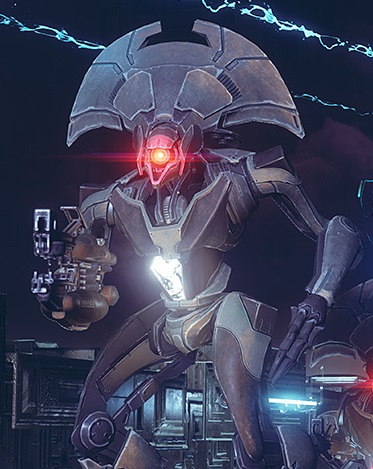
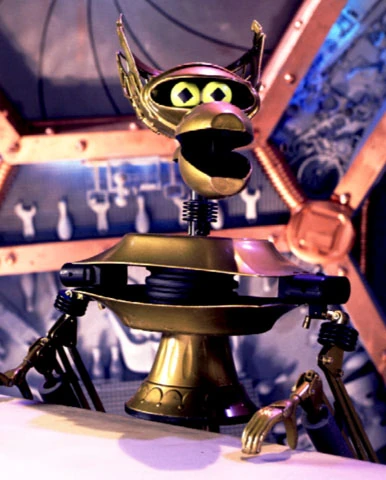
But seriously, time travel is a scourge. As I think I've said, I largely tolerate it only in fantasy. (Which fantasy can be set in space; the Vex are among the best examples of how to do time-travel writing, like a decentralized skinwalker Skynet...although their resemblance to Crow T. Robot rather undercuts their menace.) Time travel is too, well, weird, and involves math almost nobody knows, scientifically speaking; its inclusion in science fiction is thus very, very iffy. And unless the entire plot hinges on it, explicitly, like Back to the Future, its inclusion is almost certainly lazy writing. - I also watched the CinemaSins of Lucy and Valerian and the City of a Thousand Planets. As it turns out, The Fifth Element is Besson's most intelligent work.Because Lucy is bottomlessly stupid (we knew that, of course, but I hadn't realized how much so). Not only does it repeat the "ten percent of your brain" thing, it has "dolphins are smarter than humans" too (their sonar isn't even better, as the movie also asserts). It also has the person who's using the more than ten percent (and not rapidly losing bowel-continence and having her breathing, swallowing, blinking, balance, and eyeball-tracking disrupted) become a pointlessly amoral psychopath. And be able to read all languages instantly, because languages aren't conventional, you can just figure out what their symbols mean, from first principles. Yet curiously she can still only speak English. Her ability to predict others' actions—and read their minds!—comes and goes purely "because plot". Then because it wasn't stupid enough, it has "evolving into pure energy" and a form of time travel!

Valerian isn't quite as overtly contemptuous of its audience's intelligence—but it does sub in some typical European ethno-cluelessness, in the form of the obviously-based-on-idealized-Africans Pearls of the planet Mül, who "lived in harmony with the elements" before the mean old humans came along, and the rest of the Noble Savage foofarah. (Except they have light skin, which I actually attribute to light colors being easier to design around but which I'm certainly not going to stop anyone from attributing to less noble motives, because Besson has forfeited my charity.) The two main leads are as poorly-cast for the roles as they are weird-looking and unappealing in themselves; the plot is pure childishness involving behavior nobody would put in a story after their age reached double digits. Reading a number upside-down is a plot complication a six-year-old would include; vowing to kill someone who has a gun to your head is asking him to shoot you.
To say something nice, Besson wasn't the worst filmmaker whose works I watched CinemaSins about. That laurel is for the brows of the war-criminals behind Maleficent and The Fault in Our Stars. - It may perhaps come as little surprise that I don't have much regard for the Turing test; being able to pass as a thing is not being the thing. Apparently it's worse than that—apparently the test requires that the people the AI has to fool have no background in psychology, anthropology, or computers. Which is like saying "if it can convince people with no background in metallurgy that it's gold, it is gold." There's...there's actually a mineral that takes its name from that, you know? The name also involves reference to fools? Just sayin'.
- There's this assumption running around that a big alien, or an "uplifted" animal, will necessarily have a deep voice. (Destiny notably averts it; the Cabal make high-pitched piggy sounds.) But actually, humans (and felids) have unusually deep voices, for communicating. Yes, felids too, and not just the big ones; compare the sound a housecat makes to the sound a comparably-sized dog makes. A horse, too, makes some pretty high-pitched noises—if you've ever heard an angry one, it sounds like a bear bellowing in falsetto. (I think bears might also have the modified voices you see in felids and humans.)
Now, of course, aliens might've gone a similar route to humans, voice-wise; certainly zledo have deeper voices than humans, in my stuff. But they don't necessarily have to have; dog howls can carry pretty far, so you don't need to have chosen that particular method for improving your communication-abilities. But things like Planet of the Apes apes should have surprisingly high-pitched voices. It doesn't have to be ridiculous (though it would take deft handling); Charlemagne had a high-pitched voice despite being big enough to occasionally grab an unsuspecting courtier and toss him in the air like a baby. - With all the "diversity" and PCnikstvo in the Disney Star Wars installments, it's interesting that they've actually been drastically decreasing the diversity in one key way. Namely, species. Where the original trilogy had a lot of aliens (Chewie, Akbar, Nien Nunb, etc.), and even the sequels had, if anything, more (Newt Gunray, Jarjar, Darth Maul, Watto, Dexter Jettster), the sequels and other Disney installments have lots and lots of humans.
Akbar is utterly squandered in The Last...One You'll See in Theaters; there is exactly zero reason that DJ, for example, had to be human, and in either of the previous two trilogies he wouldn't have been. One of the two Whill monks in Rogue One could easily have been an alien. Personally, I call it "apewashing". There really is no reason, except creative bankruptcy, to make a character in something like that a mangy monkey, when they could be something interesting.
I honestly do not care what breed of mangy monkey you're giving me, if you're substituting that mangy monkey for something more interesting. As I've said before, quoting Penny Arcade, "A universe of possibilities, and you're fixated on the local flavor."

2018/01/23
De fabularum mirabilium IV
Fantasy thoughts. Many of them have to do with games, though I think only one mainly with my game; all are related in some way to writing or more general worldbuilding, though.
- Binge-watching all the cutscenes from both Destiny games, and then reading a bunch of the "grimoires", leads me to conclude that getting deep into the lore of MMOs that I don't intend to play, may well be my new hobby. The Queen of the Reef, particularly, is awesome.
Given that the Guardians are those raised from the dead after having died in battle, in order to fight in defense of a cosmic order that's besieged from all sides, I think we can conclude the Traveler's proper name is actually "Odin"; that would make the "Ghosts" more properly called "Valkyries". We are talking about people who named their super-soldiers' powered armor "MJOLNIR" and "GUNGNIR", after all.
Destiny also reveals yet again that the best fantasy-writing is in video games; I think it's even safe to say that Destiny has usurped the place that Star Wars once held in my heart. While I still wish they would just do straight-up fantasy rather than setting their fantasy in an ostensibly sci-fi setting, the fact remains that Destiny is better "science-fantasy" than the corpse of what was once a great film franchise. (E.g. Kylo Ren's backstory vs. the fall of Dredgen Yor: compare and contrast.) - Got Skyrim Special Edition for Christmas. Should've called it "Skyrim: Actually Finished Edition" (as the Game of the Year Edition should also have been called), because seriously, the DLC was actually content necessary to make it a complete game.
Not sure I like everything that happens in the Dragonborn main quest, but I love the side-quests, and the use of Morrowind music for the parts on Solstheim; Dawnguard hinting at the potential for redemption for the Falmer is also welcome (as is the chance to use the Aetherial Staff to summon Dwemer automata). Hearthfire allowing adoptions is a neat little bit of fluff, but the house-building mechanic is extraordinarily clunky and confusing.
Of course, this being Elder Scrolls, it's still got more bugs than LV-426. On the Switch, incidentally, the Candlelight or Magelight spells are not optional if you don't play it exclusively on the dock, through a TV. - Another game received over the holidays is, my brother got Xenoblade Chronicles 2. It seems to be more of a spiritual successor to Xenosaga than the previous two Xenoblades, and so far has very little of the tiresome pseudo-Gnosticism that disfigures every previous installment except (mostly) X. You can also download the Japanese audio as a day-one patch, and thus be spared listening to the British voice-cast, who appeared to believe they were being hired to do some low-budget animated children's fairy-tale adaptations, if their deliberately cutesy-poo delivery is any indication.
Unfortunately the subtitles are still the closed-captioning of the dub, rather than translation of the Japanese. One thing that's interesting is that they changed almost every character's name, except for (so far) Rex, Nia, and Tora—"Pyra" is really Homura, "Brighid" is really Kagutsuchi, etc. I don't know why; presumably they gave the cat-people pseudo-Celtic names because Nia's English voice-actress is Welsh, but the rest is suspiciously like 4Kids trying to pass off o-nigiri as "donuts"—they even called them "dumplings" in Xenoblade! (Is "riceball" too hard to say?)
The other thing is, Rex talks constantly about being manly and various things being the manly thing to do—that's all gone, in the dub and dub-based "subtitles". I guess, just like how references to ghosts and depictions of skeletons and zombies have to be censored for Chinese release, and some religious ones have to be scrubbed for parts of the Islamic world, references to manliness now have to be removed for Western audiences. It's an odd feeling, the discovery that one's society demands the kind of censorship once restricted to dictatorships and theocracies. - Have you read Unsounded? If not, start (possibly by the convenient link I have thoughtfully provided). It is, in essence, an undead paladin babysitting a fantasy Thenardier; it's better than that sounds, and frankly that even sounds pretty good. It has just about the best worldbuilding of any recent fantasy—a definite Brandon Sanderson influence seems detectable in the magic-system, except in Unsounded it's actually interesting and used by characters you give a damn about.
- Something I really like about the Elder Scrolls, especially Skyrim, is that although the dungeons are essentially linear, they aren't actually laid out that way. You go down into the second level of Ustengrav, for instance, and there's a big ol' hole in the ceiling that allows there to be forest plants growing in the middle of what you'd been thinking of as a Nord crypt. That's good design; it really makes it feel real, in a way a lot of RPG dungeons don't. (Not sure how well that actually maps to the world outside the dungeon, but...)
I also really like how, in Dawnguard, everything associated with the main questline has these buildings that, when I first saw them, reminded me of the Ayleid ruins in Oblivion—because as it turned out, it was (pre-fall) Falmer—i.e. Snow Elf—architecture. (I kinda figured, since I knew from the wiki that there'd be Falmer in the main quest, but it was still pretty cool how it shows up in the very first part of the questline.) They do that a lot, like how Brynjolf's scam at the beginning of the Thieves' Guild line involves "Falmer blood" and the second-to-last quest is a raid on a Falmer stronghold. - A while back, this over-credentialed (I almost said "over-educated", but...no) ignoramus was claiming that "most" fantasy doesn't have speaking spells, "except D&D tie-ins". Okay I'll give you Slayers, that began as some kind of RPG world—same goes for Harpy Gee (also highly recommended), as the name would imply. But, first off, the most successful fantasy nowadays is all in games—and in games, the spells are almost always canonically spoken, they just don't have them saying spells every time when you're playing, because it'd get annoying fast—as it does in Tales games. (Though honestly, being able to tell what spells an enemy was using by hearing them would be pretty cool, the way you can with draugar using shouts in Skyrim.)
Second off, almost every written fantasy has spoken spells. Tolkien certainly does; every writer connected to the Lovecraft Circle did. Magic requires "incantations" in Melniboné; there is at least runic magic in The Kingkiller Chronicle and gestural "signs" in The Witcher ("speech" is not restricted to aural/oral communication, linguistically, in any meaningful way). About the only exceptions are Sanderson's stuff and The Wheel of Time. (Well, and A Song of Ice and Fire, I think, but magic as something mortals directly control is pretty thin on the ground in that setting.) And in comics? Pretty sure the spells are spoken in Battle Chasers. They're spoken in Unsounded—it's unusual that Duane doesn't have to talk to use magic—but the artist just doesn't like to draw the rune-talk stuff every time (I hardly blame her). - The reason they were denying that fantasy magic usually uses speech, is that I was saying it's unlikely for people who live in a magical world to have naming-customs remotely like those of the modern West, because they generally live in a world where words incontrovertbly have power. They'd have customs more like the ancient Near East or more recent Far East.
A lot of fantasy involves the concept of "true names", but that's a very modern convention, dating I believe to the Romantics; in the real traditions, "true name" just means "real name". The ones most Navajos don't normally use, because they use pseudonyms instead? As did pre-Meiji Japanese women. Because knowing someone's real name, in the actual traditions, is what gives you the power a "true" name gives in modern fantasy.
If you're going to write any kind of fantasy other than urban, you need to have at least a basic understanding of anthropology. Not knowing this stuff makes for bad worldbuilding, people who are modern WEIRD people despite living under conditions more alien than most of the WEIRD people's ancestors ever were. The world doesn't need more Melanie Rawns, Mercedes Lackeys, or Terry Goodkinds. - Was working out the age-charts for my campaign setting's races; a lot of people seem to have a big problem with nonhuman races being long-lived. Which I find odd; I actually think the D&D races are too short-lived. Their elves, after all, are "venerable" at 350 and live an additional 4d% years, i.e. they not only may well spend over half their life in senile decrepitude, but they never live longer than 750 years. Yet the "fluff" still treats them as the ageless elves that inhabit worlds like Middle-Earth and Mallus (the Warhammer Fantasy world—no known elf has ever died of old age, in that setting, though in that setting one imagines that dying of old age is always relatively uncommon).
There's also the fact that elves in D&D are only adults at 110 (though physically they mature only slightly slower than humans), so they have a paltry 65 years (less than 9% of their maximum lifespan) before they're middle-aged at 175. Humans have 20 years, over 18% of their potential lifespan, between their listed adulthood and middle-age categories. Are the elves literally retarded, as in severely developmentally delayed? A +2 to intelligence (as elves get in Pathfinder) is acquired by a human at a mere 53 years of age, and that old bastard also gets that bonus to Wisdom and Charisma. One wonders if Gygax's spite at having to include high fantasy races in his sword-and-sorcery game (something he apparently resented) is in play here, and left unmodified by later editions of the game.
Instead, decided that all the "PC race" nonhumans mature at the same speed as humans, i.e. they're all adults at 15, but then they age slower. The relative factor varies by race; elves do it a twelfth as fast, for instance, so they can live to be 1140—(110-15)×12. I didn't quite have the other age-categories be exactly multiplied, since it's hard to make up the dice-pools for random maximum age—"24d20"? "40d12"?—but I rounded to the nearest convenient number (e.g. elves are "venerable" at 740, maximum lifespan of +4d%, so average lifespan is 982 years). - Finally, has anyone else noticed the weird "Ember Island Katara", mostly-unmotivated, catchphrases about "hope", in many recent Star Wars offerings? Destiny's replacing of Star Wars in my esteem has suggested something to me; something one might want to start, say, a hashtag campaign around, if the overly forgiving fans defend Episode VIII: The Last...One You'll See in the Theater too irritatingly. Namely, "This is not hope."
2017/12/17
De romanicorum theoriarum XI
Speculative fiction thoughts, a lot of them involving my game.
- Turns out I can actually pretty much avoid the need for any cases at all, in my gnomish language, by using the benefactive and instrumental for two different forms of genitive. I just use prepositions instead of an oblique case.
I'd initially just had person (first, second, third animate, third inanimate) indicated by which of four vowels each suffix used, and used four other, related vowels for the plural; then I'd mark the inflections (subject, object, benefactive, instrumental) with consonants.
But since I'd built the word-roots around vowel-harmony, that was inelegant. So instead I based the inflections on the vowels (one set each for each of my two vowel-harmony classes), and the person indicated with consonants, with different consonants for singular and plural. - Much is made, by people who get their news from the popular media, of that incident with the Facebook bots having to be shut down after they were set to interact with each other. Histrionics from all sides about "AIs creating their own language" and other malarkey. All that really happened was the programmers forgot to set a constraint on the outputs generated when the two bots started using each other's outputs as inputs, so that all their outputs would remain human-readable. Absent such a constraint, the programs did something we've observed for years and can easily predict and correct—they came up with their own shorthand, along the lines of saying "this" five times to mean "five of this".
A minor hiccup. So far from them having to shut down the project in terror at what they'd wrought, as the media presented it, the programmers just had to switch them back to talking normal, since the goal was developing automated systems that people can use. Interpreting this as the incipient creation of strong AI and the harbinger of the robot uprising is like if you took your dog to a kennel, it picked up a bad habit from another dog, and you shot your dog in fear of its soon gaining the ability to take on human shape. (As that Snopes article notes, Elon Musk probably bears some of the blame. Musk who is not, you'll note, a computer scientist, neurologist, or philosopher, but a materials-scientist who also has a bachelor's in economics.) - Decided that my cultures will have specific types of names. Elves are named aspects of the World Tree, or of foxes or crows (their two moieties—though they have bilateral kinship unlike most moieties). Dark elves are likewise named after aspects of assassin vines, and bats and seals (they were a different society on their homeworld and so have different moieties); goblins use a psychoactive conifer shrub (something like Ephedra, AKA "Mormon tea"), shrikes, and cats. Dwarves are all named jobs, in the form "imperfect verb, noun", ("makes shields"="armorer"). That also goes for dark dwarves and ogres/orcs, of course with more sinister jobs; dark dwarves' jobs are mostly "magic mad science" related, while those of ogres are more related to their savage lifestyle. Gnomes (including spriggans) are named qualities like "cheerful" or "inventive", with the spriggan names being less cheery than the normal gnome ones. (Think I might use the same kinds of names for kobolds; it's pretty common to be influenced by your enemies.)
I had had my humans (and halflings) named "something to do with daytime or summer" plus "part of one of the totem animals", while the Ancients were named combinations of "something to do with the sea and wind" plus "part of a fiend". (In ancient times I think they were both named "any natural condition favorable to any purpose" plus "aspect of man".) But that was too similar to my elves' naming-scheme, and the results often didn't sound good in my languages. So instead I now have the adults named after dates (children I think just have single-word nicknames); I don't think they use their birthdate, since that can be used to witch you, but maybe the date of their adulthood ceremony (which I guess they do on an individual basis rather than communally, or else everyone the same age would have the same name). Then they take a middle name, based on the date they acceded to power or were initiated into a totem-society, and their last name is either their own or their parents' wedding-date, depending if they're married or not. (Hey, you never forget your anniversary if you're using it as a surname.) - If you'll recall, my humans divide the year into tenths ("year-tithes"). Had had them named after the totem animals, but decided the calendar actually predated the adoption of that religion, and was inherited from the Ancients. Now "year-tithes" are named for the ten mysteries oracles had, as originally presented in the Pathfinder Advanced Player's Guide, since oracles were the first priests humans had (and are the only non-witch priests the Ancients still have). As I said, if half the tithes have thirty-six days and half have thirty-seven, you get 365 days. (I'm ignoring leap years.) Conveniently, given that people take their names from dates—so that people don't have to have "thirty-five" in their names—there are thirty-seven cleric domains, if you count the four that were added to the original thirty-three, so they can be called e.g. "War-Wind" instead of "31-Wind". There are also thirty-seven witch-patrons (or rather themes for them), excluding some of the ones from more obscure expansions; those are used by the Ancients instead of the cleric domains, and by witches of other societies as pseudonyms (using the date of their initiation as witches). Presumably people once had more unwieldy names?
The elves' and dwarves' native calendars are just the days of the month—originally the number of cycles the planet made in their sky in the course of their homeworlds' (the moons) day. Elves name the days of their month after the twenty-seven schools and sub-schools of arcane magic, and dwarves use the sixteen different kinds of thing you can make an alchemy bomb do. Those two are used something like the days of the week on our calendar, so a given date would be something like "Abjuration-Frost, 31st of Wind", or whatever. Also gave my gnomes a calendar of twenty divisions—think maybe they'll use vigesimal numbers—named for the twenty sorcerer bloodlines in the Core Rulebook and Advanced Player's Guide; think their calendar is used by the elves and dwarves, too, for measuring the planet's years. (Presumably elves and dwarves used to have their own way of measuring the year, since you can see the year changing from the moon—though the math is a lot more complicated since your point of view does an epicycle every couple dozen days—but the gnomish one is almost certainly simpler and more convenient for living on the planet.) - I would still like to know why the people who write Halo, who can clearly do all kinds of top-notch research and worldbuilding based on it, can't get it through their heads how fusion works. I've mentioned how you can't make a fusion reactor go critical.
But in the fifth one, you actually hear them talking about cooling the reactor. Uh...there is no cooling system in a fusion reactor, not directly; there's shielding and there might be something to dump the waste-heat but the whole thing works by getting everything very, very hot. Also the core temperature that's mentioned—1373 Kelvin—isn't hot enough to do any kind of fusion (it's a bit over a hundred Kelvin shy of the melting point of most steel). The bare minimum for fusion is 13 million Kelvin.
Also, maybe the UNSC doesn't have better reactor-safety protocol than the Covenant; maybe the Covenant just use something more dangerous as a power-source. Fission, for instance, would be much more dangerous than fusion...in any setting where fusion didn't behave exactly like fission, anyway. It's possible that whatever powers Covenant technology involves a much more volatile reaction than fusion; we're talking about people who use rockets that expel a propellant with negative mass, after all. - A lot of fiction, e.g. Burroughs's Mars, presents ancestor-worship as the only good religion, and worship of other things as bad. But one of the most evil ideologies ever, Neo-Confucianism—probably the world's first totalitarian movement—involves ancestor-worship, and props up other cults only insofar as it can use them for social control. It brutally persecutes any religion it can't make into a state ministry, and corrupts those that are amenable to being used that way (had "State Shinto" had any right to the name, it would've feared the wrath of the Eight Hundred Myriad Gods). Stoicism acted similarly with the Roman household cult, which wasn't distinguished from ancestor-worship the way the (e.g.) Korean one is.
So in my setting, I decided, the humans' ancestor-cults led indirectly to the Ancients' corruption, by encouraging a type of extended family "amoral familism" as typified by the Arab saying "me against my brother; me and my brother against my cousin; me, my brother, and my cousin against the world". The Ancients had no reason not to enslave all the rest of mankind, and the other humans had no reason to work together, until the common bond of the totem-cult came along. Plus the ancestors would not be all that strong, not compared to the fiend-lords, which would lead the Ancients down the path of witchery ("if I cannot persuade heaven, I shall appeal to hell") as well as giving an incentive for the others to accept the totems' law. - Realized I can actually have a worldbuilding reason (besides "they thought it was as cool as I do") for the revived samurai of my future Japan, to talk like period-drama characters. The speech-mannerism actually originates from the people running the red-light districts of, IIRC, Edo, but as that was the center of the samurai subculture it makes sense they'd pick it up. There's more to it than just using humble and honorific verbs in the plain rather than the polite register—humble and honorific terms are typically used for talking to and about customers, who obviously get polite usage too—but that's the most noticeable feature of it.
The reason the revived samurai—my "SF trope made realistic" version of cyberpunk's "street samurai"—talk that way, is that they began as infosec contractors, who later also became freelance personal security. Now, contractors, in Japan, talk about their customers using honorific terms, and their own company with humble ones. But those verbs tend to be longer—"de gozaimasu"/"de irasshaimasu" rather than "desu" or "da", for example. You waste several extra morae (the equivalent of one short-vowel, single consonant syllable—long vowels and geminated consonants count extra) just to say the same thing. You can cut down by two or three by switching them to the plain forms. And it makes you sound (kind of) like a samurai.
Given that, in Japan as here, IT people tend to also be other kinds of nerd—there is a reason Akihabara was originally mostly amateur-radio shops—it stands to reason that they would probably like sounding like fictional characters. From "humble and honorific verbs, but in the plain form rather than polite" to "talk like a samurai" is only a matter of switching some personal references and using some peculiar idioms (like katajikenai—something like "embarrassed"—for "thank you"). - Will people kindly quit trying to make Lucifer a sympathetic character? Not because of any moral issues but because no angel is something we can really feel empathy for. They make Azathoth and Yog-Sothoth look like comforting anthropomorphisms; at least those two kind of interact with time as we know it.
Angels don't. An angel is like a color or a number—they're basically self-aware concepts. And while they have self-awareness, that self-awareness is fundamentally unlike ours. For example, they don't learn; they just know everything they can know, by the simple fact of being themselves (the good ones are also granted knowledge by the grace of God). Learning is a change, you have to exist in time to do it.
Where traditional Islamic and Jewish thought says they have no free will, Christian theology instead says they only exercise it once—they don't exist within time, so they don't choose what they're going to do, only what they're going to be, and all their action from that point onward (as we have to conceive of it, being native to space-time) is simply in other beings partaking of their essence. - Decided, since my campaign doesn't use the Pathfinder cosmology (e.g. I use only the wings-and-horns fiends, plus succubi), that my version of the nightshades (undead fiends) will not actually be undead fiends, but rather fiends of undeath. I.e. they are the immortal servants of the power of (un)death, something like a Gravemind, or Nekron in Green Lantern—a resentful power of lifelessness and the cold dark void that enviously desires the destruction and enslavement of all living beings.
Not sure what my setting's celestials are, other than that I use the "angels" (or aasimar as we knew that group of sixers in my day, berk) as the main ones, the equivalent of the nightshades for the fiends. Think I'll have agathions, with more variable alignments, as the servants of the totem gods and azatas as the servants of the elvish deities; the inevitables (with an alignment shift) become the servants of the dwarf gods and I guess the aeons (also alignment-shifted) servants of the gnomish ones?
I know in my setting elementals are the more neutral outsiders, rather than things like psychopomps and aeons; there's also room for things like kami and house spirits.
2017/11/12
Mélange III
The random thoughts are the Spice! The Spice is the random thoughts!
- Discovered, while working on my conlangs, Proto-Indo-European was freaking weird. The vowel is basically optional, its specific quality depending only on stress or accent; it defaulted to *e but could be *o or *[nothing] in some circumstances. The *a, *u, and *i vowels were originally a *e followed by an *h, *w, or *y sound (respectively), not independent phonemes. The same root could also appear prefixed with an *s or *h, seemingly at random; the *h seems to have turned into an *a at a late point.
The fact that the vowels were so variable lends, I think, credence to the theory that Indo-European and Afro-Asiatic (like Berber or Semitic) are related, although the latter can put the vowels around its three consonants in almost any arrangement and the former always only puts them in the middle of its up-to-three before or after. (I'm not sure if *s- or *h- count against the "up to three at the beginning" rule; both seem to have been appended at random. Again, the *h often turned into an *a later on.) - I'm alternately amused and irritated when anime talk about the Spanish Inquisition as being so horrible. Because, Japan? Buddy? The Tokugawa shogunate killed 100,000-200,000 in 220 years, just at the Kozukappara execution-ground, and another 100,000 at Suzugamori; I can't find any numbers for the Itabashi one (apparently Kondô Isami is as important as every other person executed there put together), but it was probably comparable. And that doesn't count the hundreds if not thousands of harakiri that members of the warrior class were forced to commit. The Spanish Inquisition, aside from using much milder tortures than the shogunate, executed 3000-5000 people in 356 years. I.e., the shogunate killed something like 100 times as many people, in less than two-thirds as long.
- Apparently there's another reason not to use particle beam personal weapons: they're freaking impossible. If the beam's plasma is at a higher pressure than the air, it just becomes a cloud instead of a beam. If the plasma is at a lower pressure, you're putting less energy downrange. Plus, the beam's impact with the air is going to irradiate you—Winchell Chung compares it to "sending a load of red-hot buckshot through a room full of dynamite...when you are standing inside the room".
Looks like a lot of particle-beam weapons would also have inferior penetration to lasers for the equivalent amount of energy, since more of the energy put into a laser beam hits the target (most of the energy put into a particle beam is wasted on getting the particles moving in the first place). Basically the only time you're going to bother with particle beams is when you have big facilities with the power to burn, like how our current laser weapons and rail-/coilguns are vehicle-only. And even then, in space. - I don't know what to think of Star Trek: Discovery. A lot of people are offended by the political subtext that apparently lies just below the surface, but I mean, Star Trek has always had that element of a children's hospital head-injury ward putting on PSA skits. I kinda like most of the new characters, going from the first episode, though apparently the ship in the pilot isn't the one we're going to be seeing for most of it. I don't know how much of the crew in the pilot is going to carry over.
Now, of course, the Klingon "villains" are clearly 100% in the right, in their resistance to Federation cultural imperialism, but that, too, is not unheard-of for Star Trek villains. One of the people criticizing Discovery actually complained that post-Abrams Trek wasn't "cerebral". I mean, it's not; but the implication was that this is one of its variances from Trek canon. I'm pretty sure the choice between mindless action and mindless tedium in a staff-meeting is simply a matter of taste.
And a lot of people complaining about the politics involved also complained that the Klingon scenes were in Klingon. Um...what? All aliens should talk alien languages all the time, if remotely practicable; complaints about having to read subtitles are quite inaudible to me, I consume most of my television in subtitled form. Similarly, the new look of Klingons? Yes please. They had to do something; the ol' "only a rubber forehead" approach just wasn't going to cut it, when these are the main alien of the second or third most popular science fiction franchise in the Western world. - On the other hand, the new Ducktales? Holy mackerel is it good. While making Webby just the product of Dipper and Mabel doing the Fusion Dance might not be the most creative choice, Webby in the original was awfully close to Scrappy Doo territory, and that's no way to live.
Having Donald as a semi-regular is a nice touch, though I think the nephews should talk a bit more like him—occasionally in the original they would devolve into Donald-esque squawking if they got angry. Apparently (presumably after Gizmo Duck shows up), they may have Darkwing, which is astounding.
About the only way it could be better would be if they can figure out a way to give Donald elemental magic and a zipper on his hat. - Another thing that was good was, I just got Battle Chasers: Nightwar. It's a really good JRPG that doesn't happen to have been made in Japan. One thing I thought was funny was that you have the option of putting the voices in Japanese—an option you don't have in most imported games, despite the fact the Japanese audio for those didn't cost any extra money. You don't really have to, though, since the English voice-work is actually really good. Unlike Breath of the Wild, which has some of the worst I've seen in years.
- Mention of Breath of the Wild reminds me of something people say that happens to be the opposite of the truth, namely that doing the unexpected is a good thing, in writing. It's really not, not when the expected thing is narratively satisfying and makes artistic, aesthetic sense. In Breath of the Wild, for instance, the relatives of the dead Champions ought to replace them as the masters of the Divine Beasts. It was the obvious choice—in the sense that the obvious choice in a mystery is to have the protagonist brood in the shower while washing themselves in the manner generally learned when around ten years old, rather than slipping on the soap and dying, and the plot then being sidetracked onto dealing with that fact.
One writer who gets undeserved praise for doing this a lot, is George "Rape Rape" Martin. Whenever something would make narrative sense, whether it be by genre convention or just not being puerile, mean-spirited, and subconsciously misogynist, he does the opposite. Then the kind of people who probably mistake a painting hung the wrong way up for a bold artistic statement lavish him with praise. Except when the expected thing is actually stupid, like people dying only when someone else does something—if your setting is "everyone can die", in the name of "realism", they really ought to die more often in riding accidents or from bad water while on campaign, than murder. That unexamined trope is in full force, though.
As in politics, "subversion" is only a good thing when it serves a definite, genuinely desirable purpose—and is proportional to the aims sought. When it doesn't, it's just vandalism. Or terrorism. - I had worried about whether zledo having red and blue camouflage markings makes sense, but there could be an explanation. Part is that their typical mammal-analogue prey is as crepuscular as they are; night vision is as monochrome for them as for Earth animals. The main thing camouflage does in that kind of light is break up silhouettes.
Another part is that their non-crepuscular prey—or the main predators of their ancestors, remember that their world is basically Mesozoic in many regards—can see in near-UV, and the markings, which are anthocyanin, might show up in that wavelength the same way that markings on the plants do. No reason their plants wouldn't have markings visible in near-UV, for pollinators, like ours. There are also plenty of things about minerals that are "shiny" in near-UV, so the camouflage would also give some benefit without plants around.
Besides, a lot of animals have better camouflage in brush than in open land, e.g. tigers. Maybe the zled "race" (which I'm now calling "ecotype", since that's what the visible "races" are) that loses its spots in adulthood only had to worry about that sort of predation in childhood, like the predators aren't big enough to take adults.
2017/10/24
De fabularum mirabilium III
Fantasy thoughts, only a few of them related to the icosahedral amusements, and most of those indirectly.
- Came up with a Common Tongue for my D&D/Pathfinder setting. After fooling around with something inspired by Proto-Indo-European, decided to go with something inspired by Númenorean, but with an agreement system vaguely similar to Bantu or Nahuatl. My Elvish and Dwarvish languages, like most Elvish and Dwarvish languages, are also influenced by Tolkien's, but my Elvish has elements of Basque and Tibetan and my Dwarvish has elements of Polynesian (like having volitional and non-volitional genitives—tell me that doesn't seem like something dwarves would do) and Japanese. Both are also really "verb-heavy", where the base-form of almost every part of speech is a verb.
Based my fiendish language a bit on Black Speech, but, like my Elvish and Dwarvish, made very verb-heavy. (Had briefly fooled around with basing it on R'lyehian, but only I could pronounce the result, and it was a chore even for me. My fiendish does separate stems from inflections with apostrophes, though, because of R'lyehian. Yes it's a cheap way to make a word look outlandish; sometimes you're just in the mood for cup ramen, though.) Inspired by the fact parts of Black Speech are pidgin Valarin (e.g. nazg "ring" is from naškad), my celestials actually speak the same language, but with a different set of roots (basically everything in fiendish is a pejorative and everything in celestial is an honorific term), some sound-changes, and the apostrophes deleted or turned into H or a doubled consonant. Elementals speak the same language too, but with a more normal mix of pejoratives, honorifics, and neutral terms. (I'm guessing the fiends also talk the celestial register to their superiors.)
Based my "evil Atlantean" human language on Valyrian from Game of Thrones, since Martin is basically Earth-3's Tolkien (he's certainly not "America's Tolkien", unless Girls' Generation is the Korean Bolshoi; that laurel is probably for the brows of Howard or Leiber). But since I have nothing but respect for David Peterson, who created Valyrian for the show (because Martin is not a linguist), I also took inspiration for my Gnomish language from his Shiväisith, the Dark Elf language he created for Thor: The Dark World. Only, because I wanted a highly polysynthetic Gnomish (inspired by Dragonlance gnomes' interminable names), I made it verb-heavy again, and had every verb inflect for (up to) its subject, its object, its instrumental, and its benefactive. (Nouns, thus, only inflect—apart from the inflections of the verb forming their stem—for two cases, namely genitive and oblique, everything else being word-order and agreement with the sentence's main verb.) - Other than that, made a Giantish language inspired by Zentraedi (the Robotech RPG version not the impossible-to-pronounce Studio Nue version), a Draconic language inspired by Dovahzul (as iconically the speech of dragons as Quenya is the speech of elves), and a scaly-creatures-other-than-dragons language, influenced by the Parseltongue language they created for the Harry Potter movies. (Yeah, they actually made one, for the, like, twelve words of Parseltongue spoken in eight films. At least they used it at all; Hack Snyder cut the one scene where Russell Crowe's Jor-El speaks in the Kryptonian conlang, in Man of Steel.)
The scaly-creatures language, I decided, is my setting's equivalent of Undercommon, spoken by kobolds and troglodytes (actually the same race, like goblins and hobgoblins), lizardfolk, serpentfolk, skum, and sahuagin; the last two replace the fricatives that are the language's only consonants, with liquids and liquid-stop combos. (I.e., "glub" noises.) I think it'll originally have been the speech of the nagas—who, as aberrations, also speak Fiendish, but they made a bunch of servants and gave them a language that suited their mouths. Of course, the skum (and sahuagin, and maybe the kobolds and troglodytes) were made by the aboleths, but maybe they had help from the naga on making intelligent reptilians.
Did my damnedest to make sure "ka nama kaa lajerama" is not pronounceable to the scaly-kind language's speakers. - Turns out the numbered ages found in fantasy might come from Augustine, who divided history into six or maybe seven ages: antediluvian, Abraham to David, David to the Babylonian captivity, Babylonian captivity to Christ, and the current age until the end of the world. The seventh would be after the Second Coming. Interestingly, and to my knowledge wholly independently, some Nahuatl Christians, going off some of what the Guadalupana said, characterize Christ as the ruler of a sixth of the "suns" that divide up Nahuatl cosmology—one that exists after the end, and thus outside, of the cycle of the previous five.
- I'm always a little amused by the people who say you can't have temperate forests, deserts, and frozen terrain as close together as fantasy portrays them. I mean, sure, in a quasi-European setting maybe not—though it's something like 100 kilometers from the Bardenas Reales desert to the Navarran Pyrenees, so only if we assume quasi-European means northern Europe.
But I'm from Arizona; the largest contiguous stand of ponderosa pines in the world, temperate forest, is maybe an hour's drive (a day on horseback, though getting down would take longer without the highway cut into the rock) from the deserts below the Mogollon Rim. The record low in my hometown is -30° Fahrenheit (-34.4° Celsius); the record high in my mother's is 117° Fahrenheit (47.2° Celsius). Every climatic condition except true tropics is found in Arizona; we even have arctic conditions (minus the six-month daytimes) atop a couple of the mountains.
Those deserts in Spain, by the way, are the reason the US southwest has common-law principles governing its water-rights. - People who don't like "simple" good vs. evil stories in fantasy, are mostly complaining about something that doesn't exist. Tolkien, for example, isn't "good vs. evil" in any simplistic sense. Maybe it looks that way if you ignore that the Rohirrim hunt the Púkel-men and quite possibly Dunlendings for sport; or if you don't know why, exactly, there are any Eldar in Middle-Earth in the first place. It's actually just "vs. evil", hampered at every turn by the fact most of them aren't actually "good".
And other than Orcs and Trolls (which are bioroids engineered for psychopathy), plenty of Sauron's minions are not actually evil. E.g. the Haradrim: why do you believe the men of Gondor are right about them being "ever ready to [Sauron's] will"? Tolkien was a German in the British Army in the Great War (a fact that refutes just about everything idiots say about his work); he knew quite well that people who are in the right on the war itself might have quite a few unfair perceptions of their enemy.
Sword and sorcery is even more "vs. evil", good optional. Conan is a thug with a couple rules and Fafhrd and the Mouser don't even have all that many of those. But the things they fight, regularly golf with Cthulhu. - I had thought that isekai was bad because it's used so much in bad light novels, and light novels are usually bad. But then I discovered that no, isekai is just bad, period, with a few individual exceptions. I discovered this from reading the first of Andre Norton's Witch World novels—or the first half of it, and then I had to stop because I didn't give a damn. Norton isn't a bad writer in herself but I can't get into those books.
And I think I know what it is: you waste a whole chapter on establishing a person as an inhabitant of our world, and then you send them to another world and have to establish that. Rather than wasting all that time on the person who's going to another world, use the time establishing an inhabitant of the world, and establishing the world through them and their place in it. Why bother with them being from our world? They can still need all the exposition the audience requires them to get; just make them be from somewhere Podunk-y, like the Shire.
Which is not to say that there is no difference between the Witch World books and In Another World With My Smartphone—only one of them is actually a tie-in to advertise euthanasia, after all. - I decided to make my male ogres just be ogres, again, instead of hill giants, like how my male hobgoblins are no longer bugbears. Decided to reflect the increased dimorphism of my "savage humanoid" races by putting males and females in different classes: male goblins, ogres, and orcs are warriors, female goblins are experts, female ogres and orcs are commoners, male hobgoblins are rangers (as I've mentioned before), and female hobgoblins are alchemists. (I guess this converts ogres to an "advances only by class-levels" race.)
One thing this means is female orcs actually have Intelligence 11, since the stat-block you use for commoners gives them Int 13 and orcs are at -2 to Int (and Wis, and Cha). Maybe only female orcs speak Common as well as "Orcish" (Ogrish, in my setting), since the males have Int 7? I use the ability adjustments from D&D 3.5 for ogres, since I'm giving them class-based rather than monster ability scores; female ogres have Int 10 and Str 20, while the males have Int 5 and Str 24 (I assume that the "ability-score boost every four levels" applies to monsters too).
I think male goblins and hobgoblins sometimes engage in peaceable trade with other races, since their wives, being experts and alchemists, produce things like weapons and armor (and potions, in the hobgoblins' case). Basically like the goblins in Warcraft except the males are the merchants and the females are the mad scientists, rather than all being both. - Guess this means I should do the same with kobolds and troglodytes; kobolds are already statted as warriors, but I'll probably change that to experts, with the troglodytes being the warrior ones. At least in my setting, they don't have much sexual dimorphism, being gregarious intelligent reptiles and, therefore, monogamous (K-selected non-mammals are more frequently monogamous because, lacking the ability to feed their young from the mother's metabolism, paternal care is more important).
Ditto for the lizardfolk, except make them all warriors, other than the lizard scions, which I'll probably give levels in fighter (which makes them a mite tougher, whereas statting as warriors made the average ogre a bit weaker). Might re-stat the serpentfolk as adepts or maybe witches, which would make them a bit weaker (as monstrous humanoids they have d10 hit dice), but drastically increase their magic. Obviously the degenerates wouldn't change. I don't think my setting has boggards, and not just because that's properly a synonym of "bugbear". If it did I'd stat them as warriors.
It occurs to me that it probably sucks to be a reptilian humanoid in an Ice Age setting, but the reptiles did survive the last glacial period. Presumably they only live in the warm(ish) lowlands; a reptile actually has several advantages in a steppe environment, since they're adapted to dry conditions.
2017/09/24
Sierra Plus One, Foxtrot Plus Two
More fantasy and SF thoughts.
- People keep whining about the idea of "evil races" in things like D&D. But, aside from the fact psychopathy has a congenital component and probably also an environmental one—if you are raised by orcs you'll act like an orc even if it's not innate—there have been cultures that act, at least toward others, like orcs, and others whose internal dealings were, at times, pretty orc-like. Besides, bonobos and chimpanzees are pretty "evil"; if something, like Tree of Life, gave them intelligence without changing their behavior, you'd have orcs, straight up—even without Protectors being psychopaths.
Even if we taboo orcs, the fact remains that the difference between drow and other elves, minus its physical manifestation, happens all the time in history. New nations routinely form from the adoption of a new ideology or way of life. The only difference between Serb, Croat, and Bosnian, or Pakistani and Indian, is religion. The Apache are Navajos who wear their hair down, use more than six types of animal "medicine", and don't bother about the four sacred mountains; the Comanche are Shoshone who got Spanish horses left behind after the Pueblo Revolt and became horse-nomads.
Still trying to figure out how "Germans became evil when they adopted the ideology of the Nationalsozialistische Deutsche Arbeiterpartei" is an unremarkable statement but "the Illythiiri became evil when they adopted the worship of Araushnee, now called Lolth" is somehow a hate-crime. - That O'Neill Cylinder-based space colony is a bit big. Apparently, though, his Island Two—a modified Bernal Sphere 1800 meters in diameter—might also be large enough for weather. A hemisphere of the same volume is only 2,857.32 meters in diameter. That's a base area of 6,412,210 square meters, slightly larger than the city of Falls Church, Virginia, which has about 14,000 people.
- Going back to the 64- and 32-millimeter zled laser lenses; they don't lose that much range relative to the 86- and 43-millimeter ones, and they're a lot easier to design around (like, instead of the long laser being 4 millimeters shy of four inches—as big as a Soviet anti-aircraft gun—it's one millimeter shy of three).
Zledo are a bit bigger than humans, of course, so they can carry a bigger weapon than us—even so, though, a 64-millimeter laser is the equivalent of one of those 50-millimeter mortars from World War II. But you could totally stick some manner of grip or stock on one of those, and carry it as a main infantry weapon, without getting a second look.
Making the anti-materiel laser be the one with the 86-millimeter lens; sniper weapons often look pretty awkward. - Apparently while helping with the movie (franchise) of Fantastic Beasts and Where to Find Them, among the many ways Rowling revealed herself to be unteachable rabble, is she had the skinwalkers be Native American wizards, persecuted by medicine-men because medicine-men are fakes. And what does the Social Justice internet say is the problem with this? Oh, it's cultural appropriation. Really? That's your problem with this "Philip Pullman on steroids" crap? That's like criticizing Nazi Germany for its tax policies!
And as my sister points out, it's a wasted opportunity. They could've had skinwalkers be (what they are) dark wizards for whom the creation of a horcrux is Tuesday—and that be why American wizards had nothing to do with Voldemort or Grindelwald. Hard to worry about anyone else's Dark Lords when you have to deal with dark wizards who've been doing it since at least the 1100s, possible even the 900s. (The cannibalism at Chaco may well indicate such things—skinwalkers aren't originally Navajo, they're the Hopi popwaktu, and in Hopi culture, as in the rest of the language-group, it's cannibalism that makes the witch.)
Ah, but that would involve knowing about things, doing research. They're against that, in Britain. Start researching things and before you know it, you might get silly notions like that Papists are people, and maybe shouldn't be robbed and murdered at every opportunity. And then they have to bring in backwoods German squires to replace entire dynasties dating back over half a millennium, and murder hundreds of thousands of people for objecting to it. Best to avoid the possibility altogether. - Speaking of people doing bad sequels to their own work, I'm glad that I'm not the only one who noticed how much cheaper lightning- and metal-bending got, in Korra compared to Avatar. Now, admittedly, all bending got a lot cheaper (primary school child masters elements it normally takes Avatars years to master), but lightning bending is supposed to be like, say, Bankai, in Bleach, while metal bending was straight-up Visored-ness. I can see Toph maybe having students who can do it, but a whole police force? Also Toph "Chaotic Neutral" Beifong, as a cop? Right.
- It may have occurred to you, regarding that thing in the last post, that just because objects are invisible in near-IR on the day side of a planet, doesn't mean they're completely hidden. But using any other kind of IR you'd still be competing with a star, and as for radar (a radio telescope would still be "radar" if you're "detecting and ranging" with it, though it'd be a much more impressive kind than we currently use), spaceships can use the exact same kinds of radar countermeasures airplanes use—which would doubtless be pretty impressive for a spacefaring civilization. Plus a spacefaring civilization, since its engines are likely to involve manipulating a lot of plasma, can do plasma stealth.
Remember, while you're trying to figure out what to do about the enemy, your enemy is not quietly waiting. If you use an active radio telescope (much more effective than the passive kind), then you might as well broadcast a locator-beacon to your enemy's weapons. The passive kind, which mainly finds objects by their occultation of background objects, takes time to analyze. And the only missiles a spaceship carries are probably going to be nukes (since conventional explosives, if they work at all, are drastically nerfed in a vacuum). It only took two nukes to force a surrender, on Earth—how many of your population centers does your opponent have to wipe off the map before you capitulate? I'm guessing not all that many. - Read magic is a staple of D&D, the one spell wizards don't have to prepare. But you know the explanation the post-3e books give, that every mage uses the magical notation in a different way? I kind of see what they were getting at, something like the many different ciphers used by alchemists (Tim Marcoh's Philosopher's Stone notes are a cookbook, remember?...whereas Roy Mustang's are disguised as his little black book). But it's inelegant.
Had a better idea. How about, magical notation is from before writing, possibly before speech as mortals know it? The symbols used for it are not the encoding of sounds or syllables or even words. What magical notation is, is proto-writing. And for that, you need to already know the gist; the symbols act as more of a cheat-sheet. What read magic does, is tell you the gist. There were ritual manuals written along those lines in Mesoamerican cultures that hadn't adopted true writing, like the Nahuatls and Mixtecs. (Those were the main thing the Spanish burned—remember the rituals in question—while doing everything they could to preserve secular history and even religious mythology. Most of our knowledge of pre-Columbian native culture, including religion, comes from writings by Spanish friars.)
Not only does that make for a cooler worldbuilding element, it keeps things like not needing to use it on stuff you've used it on before, stuff you wrote yourself, or stuff whose author is present with you. - The whole "Ages" thing in a lot of fantasy, usually numbered, kinda annoys me. I think it does come from Tolkien (hey, we found one!); I'm not sure where he got it. Hesiod, maybe? Wherever he got it, the four-plus-one Eras of Tamriel, the five(ish) Ages of Krynn (which aren't usually numbered...at least as a D&D setting), etc., are clearly inspired by him, or (barely possibly) by something like Hesiod.
It's odd to me, because in lots of cultures (pretty much all the Romance-speaking ones, for instance, and a lot of the Slavic, Baltic, and Celtic ones), the word that is the equivalent of "age"...means "century". In French, Latin, Irish, Polish, Russian, and Lithuanian, among many others, we're in the twenty-first "age". No cataclysm, no massive shift in the relations of gods (or Valar) and men—just the rolling over of the calendar.
Now, you can do it that way. Not only Hesiod but the Nahuatls and Hopi have that kind of thing (though the Hopi and Nahuatls actually have different worlds—but a couple of Hesiod's are pretty similar to some of the Nahuatl "suns"). But you don't have to do it; assuming that the "just the calendar rolling over" kind is the "cosmic transition" kind, is how you get the Mayan calendar 2012 nonsense. If you do decide to go that route, know why.
Subscribe to:
Posts (Atom)