- Decided to consolidate my humans' Fox god and Wildcat god. Fox was less suited to stealth ever since I made him a maned wolf (called a "steppe fox" in the setting) instead, and Wildcat can be goddess of love, poetry, and stealth instead of love, poetry, and fire—He-Bear makes more sense as a smithing god anyway. ("Wildcat" in this context actually means "leopard-sized sabertooth like Megantereon".)
- Now I'm debating if I should break up my setting's year into 73 five-day weeks (quintans), with each day named for a mammal god, but then what do I do with the leap day, have it be separate or have it create a cycle like our week? Or I could do seven-day weeks by adding in the bird gods, and have roughly the same system as the real world for matching them to the rest of the calendar. (Or I could have them always match up by having the last day or two—52×7 is 364—be out of the reckoning. Oerth only has 364-day years.)
Also decided my setting has six zodiac signs, which are created by the portion of the sky between the moons, since their trojan orbit means they are always 60° apart, i.e. one-sixth of the sky. The relation of sunrise (which is what zodiacs come from) and the moon is much more complicated, but I don't think it has to be. I named the signs after the six spiritualist spirits (which are also mythic paths), which also means the warlocks can use the evil versions from Horror Adventures. - My setting's elves now live 24 times as long as humans (up to 2,640, average of 2,208), and dwarves/gnomes 20 times (up to 2,200, average of 1,840). I decided I was being too diffident about having them live thousands of years; my elves were already living half their current ages, 12 times as long as humans, and I figured why not go whole-hog for both the more "faerie-ish" races?
I keep toying with having something like the Bleaching, except where that inflicts aging ahead of schedule (Golarion gnomes who avoid the Bleaching still live the ages listed in the Core Rulebook—which are the ones also listed in the 3e Player's Handbook), this would be more like they only age if it affects them. But immortality is a very different thing from great longevity, and a millennium or two is nothing in the grand scheme of things. - Good God but numeral systems, in constructed scripts, are hard. Coming up with one for my dwarf-gnomes; wanna use symbols based on hands and feet, since they have base-20 numerals from counting on their feet too, but doing that at all efficiently is hard. Kinda have a handle on it though.
Still struggling with my Draconic, though I think looking at the Banished script was a move in the right direction. Of course that's meant to be shown on digital displays (one assumes Predator was an inspiration, hardly the first time in Halo history), but you can analogize to claw-carving. - Decided to give alchemists 0th-level formulas, which I'm now calling "tinctures". Thinking I'll give them the witch list, but add purify food and drink as well as putrefy (no existing list includes both, that I know of). The way it works fluff-wise is you prep a certain number of minor effects that can be activated using almost anything that's nearby, since alchemist "spells" are really a special version of potion, that they drink. (They need to spend a discovery to let their formulas work for anyone else, which among other things renders "mass" versions of spells useless till you do that.)
Also considering giving paladins and rangers 0th-level spells. There's a class, mediums, that get 0th-level spells at 1st level despite only getting their first 1st-level spell at 4th level, like those two do. Based on the difference between other spontaneous vs. prepared casters, it seems like they would get one fewer spell per day than a medium has spells known (alchemists get as many as maguses). Thinking the paladins get the 0th-level ones of clerics, and rangers of druids. - Giving serious thought to doing the thing where all casters work like arcanists: prepared casters who prep as many spells per day as a spontaneous caster of their type knows, and then treating those prepped spells as if they were the spells known of a spontaneous caster. One thing this would mean is that the paladins and rangers just naturally get the spell allotment of mediums, completely. Another is that maguses work like bards (or, I think, inquisitors?).
Then it would just make it a flavor-text difference between sorcerer and wizard spellcasting: sorcerers cast from having observed or directly undergone magic, wizards from having studied it. Presumably the way sorcerers prep their spells in the morning is by meditating on these experiences. This also might give a good difference between oracles and clerics: clerics pray for their spells, and oracles receive them as direct infusion of their spells into them.
I do think alchemists will stay as purely prepared, though, since they have to brew their formulas (now including tinctures) beforehand. - Also kinda toying with making divine casters have the hit dice and attack progression of arcane casters, but that one might be ill-advised because I don't have any divine-caster players at the moment.
- Apparently Wizards' resurrection of Spelljammer is incredibly perfunctory—rumor has it they had a five-member design team and a seven-member marketing team. Allegedly the section on ship-to-ship combat threw out turning and maneuverability rules and weapon arcs; now your ship can automatically attack anything in its range.
As far as I can tell, the Rule Zero Fallacy ("this rule is not broken because I can houserule a fix", following from Rule Zero of RPGs, "GM has final say") has now become Wizards' official ruling on all possible adjudication questions, including when they actually put out the official treatment ("treatment") for something.
Showing posts with label reality check. Show all posts
Showing posts with label reality check. Show all posts
2022/08/29
Playing with Fantasy XXXVI
Icosahedral RPG thoughts.

2022/07/31
Playing with Fantasy XXXV
More icosahedral fantasy thoughts.
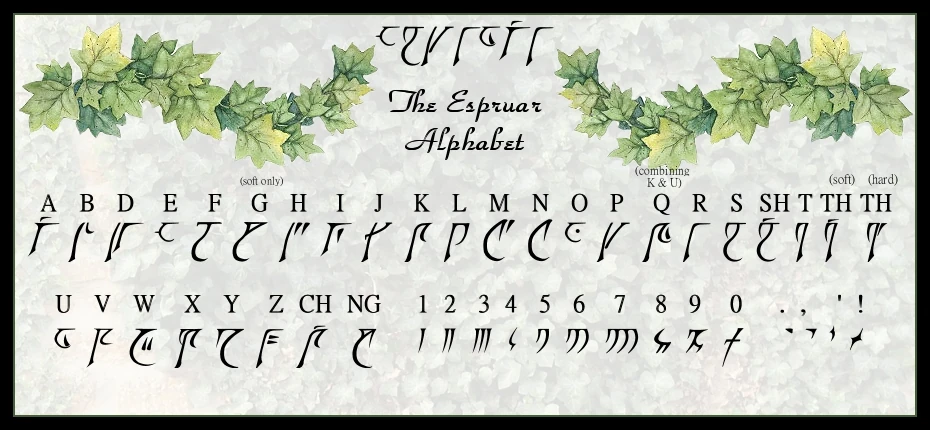
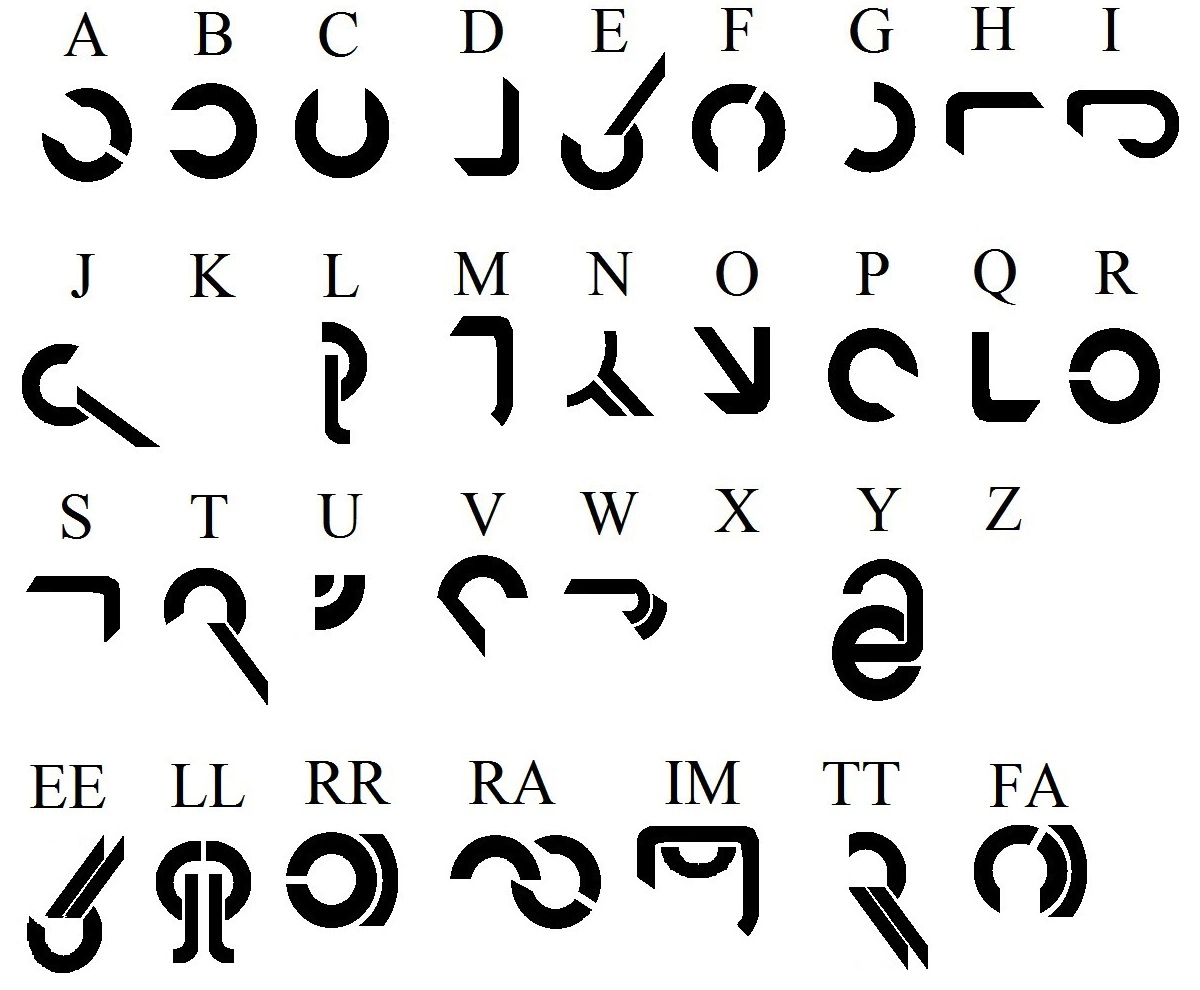
- Man it's hard to come up with a Dwarven script that looks as good as my Elven script (if I say so myself). Took me forever to figure out what shape I wanted it to be based on (I use a "theme" shape in most of my nonhuman scripts). Was thinking triangles, maybe use some element from the Covenant alphabet from Halo. My Elven draws inspiration from the 3e rework of Espruar and the Eliksni script from Destiny.
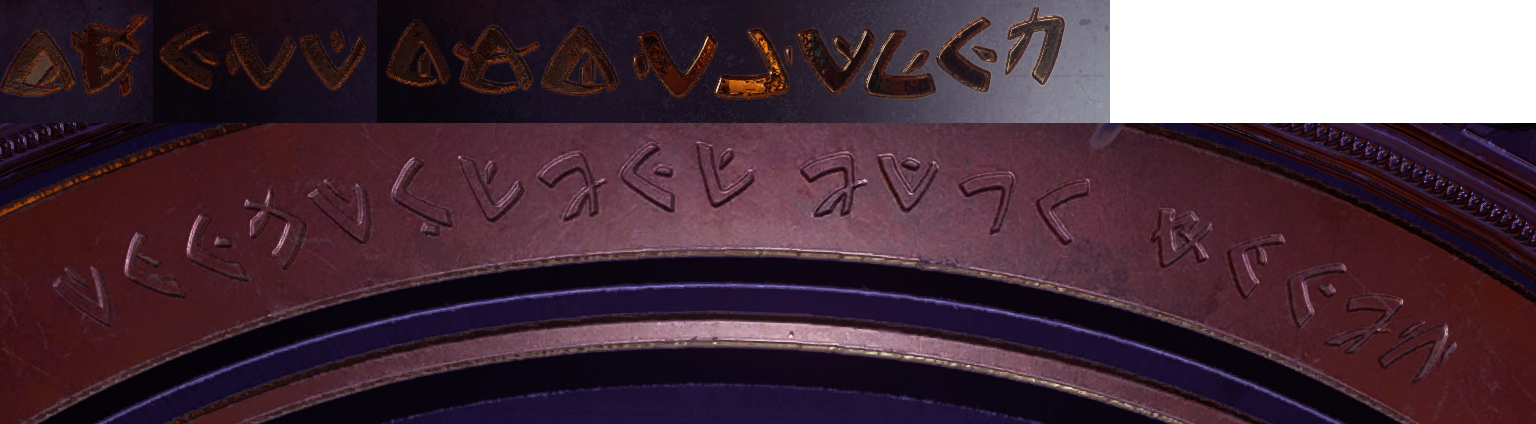
Eventually decided, my Dwarven combines the Covenant script with the "cat-pupil shape" that Rellanic, the 4–5e Elven, uses. See, I realized, dwarves aren't carving their script into rock with a chisel or wood with a knife. They're engraving it in metal with a burin (which burin is a single one of their mushrooms, metallized and with a sharpened tip). And you can get insanely florid with a burin engraving, so I actually have complete freedom in letter forms! - My Ogrish (based on Dwarven) retains more elements of the original, Covenant-like triangle script, but is more of a cursive form of it, like the version that you can find in signs and stuff on Sanghelios, in Halo 5.
- Decided that the best way to do my games at the actual table was to get a cheap (something like $250) flatscreen, hook a laptop to it, and then use a map program like Megasploot's Dungeondraft to make a dungeon map, to scale. You put a cover (we got a special one eventually but the first time we just used carefully arranged overhead-projector transparency films), and just move your miniatures, pawns, etc., around on it. Given the prices of poster printing, it pays for itself by like the sixth map you use it for.
Of course this would all be somewhat moot (I keep having players have to telecommute, and have someone on my end point their camera at the map and stuff) if virtual tabletop programs like Foundry were easier to use (also apparently there are issues with how you host it?), and if Roll20 was not a terrible, terrible company, from being shockingly petty to critics of their business practices to obnoxious Corporate Woke™ grandstanding on Twitter and elsewhere. - I would say my view of Dungeons & Dragons: Honor Among Thieves does not even approach cautious optimism, but I am willing to be impressed. Kinda wish they would actually play things straight for ten seconds, though. Not every movie has to be the thing those "Marvel fans when The Batman doesn't…" memes were talking about. (Also I loathe, abominate, and revile the "fast-talking bard" archetype that shallow 5e fans seem enamored of.)
- It occurs to me that making my dwarves actually be gnomes, and therefore have roughly the same build as half-elves, will make the dwarf/gnome-based ogres and orcs be much more similar to goblins. Then again I suppose my elves and gnome/dwarves are big and little "fairies", so it kinda makes sense that the monster versions are similar to each other.
The culture is still very different, with goblins having strong personal loyalties and an obsession with fear and stealth, and ogres being very nearly a war of all against all, with a penchant for frontal attacks (which in no way means they won't stab each other in the back, though). Among other things, goblins get a Dexterity bonus, while ogres get a Strength bonus. - Very hard to figure out what to do with my Draconic, since too cuneiform-like will be too much like Dovahzul. Kinda wanna examine the Banished alphabet from Halo Infinite (which is in many ways the worst Halo, not least because the Banished suck as villains—Cortana would have been much better, but 343 has an amazing ability to utterly squander villains, see also the Ur-Didact and Jul 'Mdama). There's also Iokharic from D&D, which as I may have mentioned at some point shares letter-shapes with 3e Espruar.
Thinking I'll do something like the Naboo futhork from the Star Wars prequels, probably combined with vertically skinny letter-shapes reminiscent of Nüshu, an odd women-only script from part of China. Though with the letters grouped closer together (and words grouped into trios, in formal writing, like the tetrads in Classical Chinese).
Also reworked my "Sylvan", which in my setting has become the language of the araneas, formians, and thriae—bug people—that serve the law-spider outsiders. The previous script looked much too much like "Daedric" (really Dunmeris, with the other name being just what it was called in the Daggerfall game files). Went with, in contravention of my usual practice, a featural alphabet, since they're the minions of law-spirits; it wound up looking vaguely reminiscent of "Daedric" anyway. - Apparently Spelljammer in 5e, rather than bothering with ship's ratings (a table based on the level of a spellcaster sitting in the helm that would determine how fast the ship could move), has the thing go 10 miles per hour per level of the highest unspent spell-slot the spellcaster has. I take a couple issues with this (miles per hour do not tell you tactical speed intuitively—10 mph is a "normal move" of about 45 feet, or a "full-round move" of 90 feet—and I liked the major-minor helm distinction, though I suppose the latter does also affect the largest ship you can move via the helm in question), but it does streamline things. Might use it for my airships, or some of them, since I think Wizards has the basic Spelljammer rules (such as how helms work) as OGL.
- A search of le blogue suggests I have not mentioned the problems with Stranger Things? Probably the more fundamental but also the simpler is that it allowed the shills at Hasbro to market the game by the most shallow methods imaginable, flooding us with bandwagon-jumping bounders with no respect for the hobby (that invasion really took off with Critical Role but Stranger Things began it).
More complex, probably less important but more emotionally visceral, is how they have warped a generation's understanding of the names they have the characters drop. Demogorgon has two baboon heads and tentacles for arms (also that thing is a damned gug). A mind flayer…you know what a mind flayer is, and you probably know the thing in Stranger Things is nothing like one. And Vecna is an archlich.
Of course, D&D itself visited upon us the ludicrous idea that Vecna could lay siege to Sigil. Right, because She Who Flays, who can impose terms on entire pantheons, would need adventurers' help against an attack by one lich-god.
2021/11/29
Mélange VIII
Random thoughts, only 5/8ths about icosahedral amusements. None of them reference Dune because I hate Dune (much like the Warhammer 40,000 setting it heavily influenced, it's better as a source of memes than actually engaged with seriously).
- Realized probably the simplest way to turn kytons into goblin ancestor-gods, which I'm calling "barghests", is to swap out a few powers here and there (because they're pure fear, not torture) and then apply, basically, the lycanthrope template, but with my version of worgs as the "base animal". I actually have to swap a lot fewer things than one would think, because kytons run almost as much on fear as on pain, and many of their mutilation-y things will still fly given how much influence from Predator my goblins have.
- Arcane is good. Really, really good. My brother has the bizarre idea that Silco having a cause, the independence of Zaun, makes him better than the other gang leaders of the Lanes, who operate purely from self-interest. But the other gang-leaders didn't spread Shimmer around or come very close to a losing war with Piltover largely out of nationalistic pride.
In the immortal words of Daeran Arendae, violence in a good cause is indeed different: it's much more bloody, and is done with pinkies out.
If I had another complaint, it would be that "Get Jinxed" plays at one point (albeit diagetically, when Jinx is listening to the radio while working—"you're listening to your own image song? don't be that guy"), but "Here Comes Vi" never does. Shameful, shameful oversight. Admittedly she isn't a Piltover enforcer yet, maybe that's it? - Golly bob howdy but Pathfinder is weirdly light on items for storing and preserving food, and cooking it. I mean you can use a cauldron of brewing in camp as well as in the alchemy lab, but other than that? I don't think there are any magical storehouses or anything.
I also think there need to be more low-level magical traps, let your rogues earn their keep earlier on. I mean, since a summon monster VI trap is CR 7, isn't a summon monster I trap CR 2? And maybe summon minor monster as CR 1? 1d3 fiendish-template animals sounds like a CR 1 hazard to me. - Ghostbusters Afterlife is a fitting conclusion to the franchise. The two main kids are extremely believable as Egon's grandchildren (the girl especially is adorable—not just her looks and mannerisms but how her shirt is often buttoned wrong), and everything else is good to excellent. (It does have the weakness of being much more interesting before the big ghost stuff starts happening, but that was also true of the original.)
Critics have mostly panned it in the stupidest manner imaginable, seemingly to punish it for being what the fans wanted, because the critics wanted the 2016 one to be well-received. Which was never going to happen; you can't try to reboot one of the tightest-written movies ever made as a piece of crappy improv, no matter what 1986 Fundamentalist "everything in pop culture is satanic" moral payload you attach to try to shame people into liking it.
Sorry but the 2016 one was fourth-rate improv consisting very largely of fart jokes, extended painfully-stupid dancing sequences, and a running gag where the protagonist is obnoxious to a Chinese-takeout delivery guy. Can't imagine why people didn't like it. - The seven deadly sins are drastically overdone, in fiction. Decided instead that my setting's blasphemous warlockery will run off the Four Sins Crying to Heaven for Vengeance: perversion (the sin of Sodom), betrayal (denial of wages to workers), oppression (of widows and orphans), and murder. Of course, a game-setting is more PG-13, so the main form perversion takes (aside from the decadent witch culture having some sibling marriages) is cannibalism—sexual appetites aren't the only ones that can be perverted. Helps the royal caste of the modern thalassocratic Valyrians are dhampirs.
Also decided that the non-fiend evil gods basically want to use the witch-power of the fiends against fiends, like using the One Ring against Sauron, or using Stasis against the Darkness (huh funny how one of those examples understands what a bad idea it is, Eris). They mostly take the form of murder (i.e. human[oid] sacrifice), although the ogres and orcs are tyrants and cannibals and the dark elves and dwarves are tyrants. (Both go in for a certain amount of backstabbing but you can't encourage that and still maintain a society, any more than you can permit most versions of perversion.) - Decided that the elves' panthers age relative to lions as elves age relative to humans: maturity 2/3 later (elves in my setting are adults at 25 to humans' 15), then age 12 times slower. Which means that, as lions are adults at 3 years, the panthers are at 5; lions get to be middle-aged at 8, so the panthers reach it at 96.
From there though we apply the game-rule aging system where "venerable" is twice middle age (70 for humans, who hit it at 35), so 192 for the panthers. Then "old" is halfway between the two, 144 for the panthers. Lions only live about 19 years in the wild, which makes the panthers' maximum lifespan 228 years. - Thinking I'll redo my Draconic alphabet, since the old one was pretty much just Persian cuneiform upside-down and with the phonological values assigned at random. Thinking I'll take some cues from the Covenant alphabet, but with the strokes inside the triangles rather than as the triangle. But also from how Ugaritic is actually a cuneiform version of Phoenician (e.g. all the signs that incorporate an O shape, the ones that in Greek or Latin are O, Θ, or Q, replace the O shape with a <-type thing).
Specifically how I think I'll have it work (I need to figure out all the nitty-gritty still) is take letters like something in a standard alphabet, convert them to cuneiform-esque shapes, and then convert those cuneiform-esque shapes to triangles. Specifically upward-pointing ones: Draconic is written bottom to top, by a dragon perched above whatever hard surface they're scratching letters into (hence the cuneiform, they're claw marks). - HBO Max has a bunch of DC stuff, and while the fourth season of Young Justice is even more painfully terrible than the third, at least there's a bunch of movies. I particularly like Superman/Batman: Apocalypse and Superman Unbound—I really like Supergirl when she's not being desecrated by the CW (and by current DC writers, of course). Also the fight in Apocalypse with Wonder Woman and Barda against the Female Furies, is one of the best fights in all of animation.
There's also The Batman, in many ways the most underrated DC show (and it's pretty highly regarded, just not highly-regarded enough given it's close to as good as Batman the Animated Series). I wonder why Krypton isn't on there, though, unless it's a licensing issue with Syfy or Universal—tell me the thing with Sig-El's grandfather's Fortress of Solitude, and the camera pulls out to show the El crest, and the Superman theme plays, doesn't stir you deep inside.
2021/10/28
Playing with Fantasy Λʹ
Thoughts, back on my constantly-RPG bullshit again. This is numbered with the Greek numeral for 30 so as to avoid "XXX".
- Decided to break down divine casters this way: clerics still come from dwarves, but now so do druids; oracles come from gnomes; witches come from elves. Humans still acquired all three late, having only had ancestor-worship adepts for most of their history. Decided the prevalence of witches among the black-magic empire (so I don't have to rewrite as many things) was because they were more influenced by elves than by dwarves or gnomes, magic-wise. Think I might have witches count as divine casters in terms of stuff like scrolls, but not for armor purposes.
- Decided that my Elven, which used to mark nouns and pronouns for ergative, oblique (in practice often genitive), and reflexive cases, will instead use two different pronoun stems for absolutive (formerly unmarked) and ergative, combine the two for reflexive, and do the oblique by just putting prepositions on the pronoun (like "of" for the genitive). Nouns are marked for case just by position, agent before patient before verb (same as Tibetan and Basque).
I was going to use the absolutive, since I was thinking of it as an "object" case, including "of a preposition", but apparently it's actually usually the ergative that's used as the prepositional case if a language doesn't have a separate one (helps to think of the ergative as being "by [noun]", and then every other preposition just replaces the "by"). You do not want different prepositions to take different cases; I have trauma flashbacks to high-school German just thinking about it. - Giving my elves and dwarves 120-foot darkvision and spell-like abilities, like drow and duergar; the dwarves get the derro spell-like abilities (ghost sound, daze, darkness, but once a day each, and not sound burst) instead of the duergar ones (enlarge person and invisibility, once a day each). I'm also giving elves 11 + character level spell resistance and dwarves 6 + level, along with letting them have the Healthy trait that replaces the Hardy trait (there's an option in the core rules for dwarves to replace Hardy with 5 + level SR).
They also get resistance 5 to cold (elves) or fire (dwarves), which is only worth 1 point in the Race Builder, but in the rules for elves it replaces Elven Immunities, which is worth 2, so I give elves the 11 + level SR which costs 1 point more than 6 + level. 11 + level isn't that OP; a caster 1 level higher than you, or 1 level lower with Spell Penetration, can overcome your SR by just rolling a 10. And I took away all the elves' and gnomes' racial bonuses to saves against stuff like enchantments and illusions—plus SR doesn't work on most witch hexes unless it specifies they're spell-like abilities.
Gnomes are less nocturnal, and so have only 60-foot darkvision (plus electricity resist 5, the standard gnome spell-like abilities, and 11 + level spell resistance, same as svirfneblin). The elves and dwarves are from the moons, where the nights are 15 days long, and on the far side you can never get "moonlight" from the planet overhead being in daylight (but since the day is also 15 days long, no light sensitivity). Gnomes are from the planet. I basically restrict low-light vision (which elves and gnomes have in the core rules) to real animals and things based on them, like catfolk and gnolls. - Thinking I might call witches, in the "dark magic" sense rather than the "quasi-divine primary-caster class" (because now witches in that sense can be any divine casters, while witches in the class sense are elven priests), "warlocks". Firstly because it literally means "oathbreaker", and second because the warlock class, introduced in
Let's Send 75% of Our Playerbase to Pathfinder or 1e4e, is the most hateful thing in 5e to people of decent good sense.
Warlock is a douchebag-bait class (though Critical Role makes all of 5e straight-up catnip to that demographic no matter what class they wind up playing), balanced by people who went to the Riot Games school of design, that absolutely runs off the "15-minute adventuring day". Alternatively I might call the bad ones "defilers", which does of course raise the question of whether the good ones are "preservers". - My hunt for a dwarven hammer comparable to the waraxe (which is a gnome weapon in my setting) and bastard sword, leads me to use the sphinx hammer, I think used by the Egyptian dwarves of Osirion, on Golarion, but with the "one-handed with Exotic Weapon Proficiency, two-handed martial" thing instead of being able to throw it. Still not sure what to call it—leaning toward "battlehammer". "Hammer of arms" seems to sometimes be used for a particularly large warhammer, also—think I've seen it used as a translation (possibly by machine?) of the Warhammer Titan's name, in Attack on Titan.
My dark dwarves, on the other hand—distinguishable from the others only in their weapon familiarities, stat-wise—use (light and heavy) picks instead of hammers. Where the other dwarves make weapons from a coralline algae, the dark dwarves make them from the chitin of giant spiders. Thinking they'll also make crossbows from chitin, instead of firearms like other dwarves use—though come to think of it you could probably make a decent-ish barrel from the leg exoskeleton of a giant arthropod, given how strengthened it would have to be at that size. - Decided that my elves' hunting god, who is the poisonous resin that protects the World Tree, will get Calistria's stuff, in elven contexts—his sacred animal is a toxic moth with venomous caterpillars, and those are easy to swap in for wasps. He'll also get most of Desna's butterfly-themed stuff. (Look, I'm a Spelljammer player, elves and Lepidoptera go together.)
I had had the elves make textiles from fibers of their sacred trees, and I think they still make some, but a lot of their stuff, now, is going to be made from silk collected from the abandoned cocoons of his sacred moths. There are actually three different other kinds of silk, from three other moths.
Haven't figured out what gods of my setting will get most of the other stuff from Golarion (as far as I know, if it's on the Archives of Nethys it's OGL, once you change the names; they're on the PFSRD site under the disguised names), though of course each pantheon's war god gets most of the Gorum stuff. - Minagho in Wrath of the Righteous made me realize the obvious path to doing multiple levels of "seducer fiend" (succubi and incubi, minus the pretense those are two different things). Namely, succubi as "common" ones and lilitu as "greater" ones. Decided to make cambions into the basis for a "lesser" one, too.
Think, though, that I'll replace the lilitu's husk stuff with the deimavigga/apostate devil's evangelization, indomitable oration, and ohrwurm powers. Think I'll also replace the cambion's sinfrenzy with the raktavarna rakshasa's "master's eyes" ability, minus the part about being a familiar.
2021/07/29
Playing with Fantasy XXVIII
Second post in the month.
- Hmm. Might just say the bugbears have no "warg" big enough to carry them, and instead, just get pulled around in chariots. Maybe their wives drive them? In Greece and I think India, the warrior would be driven around, seated, while the driver stood. Whichever of you drives, or if you drive with one hand while attacking with the other, you wouldn't want to stand in a chariot, as an 8½ foot person. Large-sized wargs are significantly stronger than horses, even advanced simple-template heavy horses (which is not what would pull most chariots, anyway).
I decided to construct my "wargs" from the ground up, using the hyena stats as a base, then changing the type to magical beast and applying the advanced simple template. Then for the big one I also apply the giant simple template. For the cats the elves ride I did both the same steps, but to the cheetah—since they're based on Homotherium and it was seriously a "sabertooth cheetah", down to having reduced wrist mobility (cheetahs hold things between their front paws more like a dog does, e.g. with a bone, not like a cat or leopard would). - Might even have the dwarves stop riding things, and just either use vehicles, walk, or, in the case of in warfare, take up a position and bombard an enemy with artillery, rather than bothering about cavalry(-analogues). Yeah I kinda like that: between being super technologically advanced, and being dwarves, they have nothing in between "take a train (or other vehicle)" and "walk".
The only problem, of course, is I really like all my nonhumans having the thing they ride do their agriculture. So maybe, instead, they ride bears? Bears are the largest fossorial (burrowing) animal, after all. There's a good candidate, the cursorial prehistoric bear lineage, the hemicyoninae—which as the name ("half-dogs") suggests, were built like dogs; I had considered them for the ogres but they work better for dwarves. Specifically, Dinocyon, which was just under 8 feet long and weighed about a quarter of a metric ton—easily fudge-able into something that can be ridden.
Think I'll just have the ogres and orcs run everywhere. They still have dwarf endurance, after all. - Incidentally, apparently there is an evolutionary link between burrowing and group living, in mammals, as can be seen from rodents (e.g. prairie dogs—which are actually, basically, chipmunks) and meerkats (a kind of mongoose). So it makes perfect sense that dwarves would be lawful, i.e. group oriented. Also apparently short, powerful limbs is one of the six common traits of fully burrowing-specialized mammals, identified at the turn of the 20th century. Though to be full-fledged burrow-sepcialists, dwarves would need small ears (doable) and to be blind (not so doable, but darkvision makes that one moot).
- Wrote an adventure where the PCs find portions of journals, to piece together what's been happening. The easy way is just to find sections of the journal, but, who would do that? You don't let your journal of your descent into madness get scattered all around all willy-nilly.
So instead, they find the journals themselves, but each section is in code, and they have to find the keys to each section's code, scattered around. Still meters out the paces of revelations, but is much more believable from a "why would it be that way, if it weren't in a game?" standpoint. - Anyone else see the problem with the fact the Pathfinder kingdom rules have no vacancy penalty for the "heir" role? Because…Stability is a score for kingdoms. Not having an heir has historically been just a little detrimental to stability (and not only in hereditary systems; a clear line of succession is a vital thing in any government).
- Realized that Druidic is yet another language subsumed into the glossolalia-language spoken by the outsiders and aberrations in my setting, the one I call Primordial (I might change it to Primeval, since Primordial means something else in 5e). The way I think it might work is that mortals, at least, can only understand the Primordial of those whose alignment is within one step of theirs, or whose elemental affinity is not incompatible with theirs. So only fellow treehuggers can understand Druidic.
Oddly, this basically brings back "alignment languages" from OD&D and 1e AD&D. I mean think about it, nothing else really makes any sense for that; the idea Gygax seemed to be going for was a sort of alignment-specific argot, which makes no sense when you forget your old one upon changing alignment. Much more plausible that you can gabble glossolalia at each other and interpret it. (If I ever publish this stuff formally, people are gonna think I'm a Pentecostal, the way you can tell Tracy Hickman is LDS from countless aspects of Dragonlance.) - Someone just revealed the most terrifying thing in the history of humanity: where before, D&D players were trying to recreate fantasy books or movies, and then for a while fantasy video games, now they're trying to recreate Critical Role. Which…aside from sounding like Frankfurt Marxist analysis of tabletop gaming…is basically every problem in tabletop gaming that began after 1984 (there were other problems introduced before that, but 1984 is the year the first Dragonlance modules came out—overall I like what it did to the hobby but every change has a downside).
2020/12/12
Playing with Fantasy XXII
I actually wanted this to be a general spec fic post, but as it turns out I only wanted to talk about FRPGs some more.
- Turns out it was actually fairly easy to do my blackletter and uncial scripts, I just needed to actually write with a pen in a notebook rather than trying to create directly from Inkscape. I even made capitals and small letters for the blackletter (I don't think they use the two quite the same way we use our two cases). For the cursive version, used by the remnant of the "evil Atlantean" culture, I decided to connect the letters at the bottom, rather than at the top like in most European cursives.
Was kinda at a loss as to what to do for the human script from the other continent, the Tainish-inspired language. Briefly toyed with basing the shapes on the simplest hanzi radicals. But it looked too much like actual Chinese characters. Instead, I went with a more Indic-inspired script, with a line at the top like Tibetan (not like Devanagari because they don't connect), but with several of the characters distinct from anything Indic. (And not an abugida. Have I mentioned that I do not like those?) - I discover the people who did the Dothraki script for Game of Thrones apparently did a script for Valyrian, too, but I don't think they worked it out in time for it to appear in the show, at least not before they had done a bunch of stuff in Roman script and it would be weird to change halfway through—but if Game of Thrones ever gets a Special Edition they should totally change it, the way later versions of Star Wars changed Roman letters to Aurebesh.
- Have done some work on my setting's sign languages. Among other things, I decided to ignore iconicity—the quality in sign languages of a sign suggesting what it's the sign of. E.g., ASL for "baby" is rocking an imaginary one. Whereas the ASL for "name" is tapping the index and middle finger of one hand against the index and middle fingers of the other, which has nothing to do with names.
Iconicity is very common (something like 60% of ASL signs are iconic) in real-world sign languages, because they mostly come from deaf people (or occasionally travelers, e.g. "Plains Indian Sign") communicating with people who don't speak them. But my setting's sign languages come from elven hunters not wanting to spook game, dwarven smiths needing to communicate despite the noise of work, and humans from the other continent needing to communicate while silent rituals were taking place, without disrupting them. I.e., they were mainly used with other people who spoke them. And for comparison, only 1.15% of Japanese words connect their sound to what they are (onomatopoeia, the buba-kiki effect, etc.), and Japanese has an unusually high percent of words formed that way.
That's the worldbuilding justification for my sign languages ignoring iconicity. The meta reason, of course, is it's easier to randomly generate your sign words if you don't bother about iconicity. Instead, I just have a small number of handshapes, orientations, and locations, plus internal motions, randomly combined, that mean lexemes, then "path" motion marks things like agent, patient, and verb aspect. My elven and dwarven signs are all one-handed, the former from being done while holding onto weapons or treebranches, the latter from being done while holding a tool in the other hand. I still need to do a bit more work on the human sign language, though. - I like how Pathfinder gives you a lot of granularity in what mix of primary caster (like wizards, sorcerers, clerics, and oracles), secondary caster (like maguses, warpriests, and inquisitors), or tertiary casters (like bloodragers and paladins) you want. They even have a prepared, Intelligence tertiary arcane caster, a fighter archetype called "child of Acavna and Amaznen", that can prepare and cast 0th-level spells, from 2nd level, and then at 5th (presumably 4th if they rate a bonus spell, though the text is unclear) gets the spells per day of a ranger, but from the bloodrager spell list. So if you want a more martial arcane-caster class than a magus, and prefer Intelligence prepared casting to Charisma spontaneous, and/or don't want to bother with the hybrid bloodrager class, that's your guy.
If you want a more arcane arcane-caster class than the magus, but still one that's more martial than the default wizard, there's the "sword binder" wizard archetype, which is basically a wizard but can use their bonded sword (personally I would let them bond to and use any one-handed weapon) at range, like the universalist's "hand of the apprentice" ability, but delivering touch spells through the weapon like a magus, including at range if they use the hand of the apprentice. And can eventually make their weapon fly around, and clairvoyantly spy on the area around it. (If you like spontaneous Charisma casting instead of prepared Intelligence casting, there's also the "eldritch scrapper" sorcerer archetype, which has some features of the brawler hybrid class.)
I might let rangers have the option of 0th-level druid spells, on the same basis as the fighter above, instead of one of their combat-style feats? Can't really let paladins do the same, except maybe if they delay getting divine health till 7th level? I'd take "0th-level spells, usable at-will an infinite number of times a day" to lose one bonus feat or hold off total disease immunity for four levels. - Decided that I'm going to base the lawful planeborne in my setting on (heavily modified) aeons, not qlippoth, mostly because the aeons are more thematically similar; a lot of them do have four arms, which I can hang "is now a spider spirit" off of, at least as easily as turning all the qlippoth into spiders. Also think I'm going to have ethically-neutral "planeborne", probably based on psychopomps, as well as the morally-neutral elementals (which use modified div stats).
Also decided that dead giants will definitely become titans, dead goblins become kytons (but focused on fear instead of pain), and probably that dead dark dwarves become daemons and dead dark elves become asuras (all modded somewhat). Not sure if dead ogres become rakshasas or oni; leaning to the former. Also added demodands and nabasu and vrolikai demons to the otherwise devil-based fiends, along with succubi (which include incubi, here). - As I've almost certainly said before, dead (good) humans, including halflings, become agathions, elves become azatas, gnomes become kami, and dwarves become inevitables, all modified in various ways to reflect the different cosmology. The never-mortal (I call them "firstborn" or "first generation") "planeborne", other than the ones I just mentioned, are evil fiends, based mainly on devils (but with all three ethical alignments), good celestials based on angels, morally neutral elementals based on divs (with all three ethical alignments), and chaotic (with all three moral alignments) nagas, based on proteans.
- I've been calling my setting "Thrice Two Worlds", because there are six planets or moons that intelligent beings originally came from, though they've since all converged on the main planet due to fiend invasions of their homeworlds. (Reminiscent, perhaps, of every continent other than Tamriel, on Nirn, except Summerset, eventually disgorging its Ehlnofey population onto the Tamriel mainland, but I don't have any conscious influence from that.) I believe there is an in-universe reason Faerûn is called "the Forgotten Realms" (all those lost civilizations, I think?).
"Thrice two", of course, is just a cool way to say "six", but I think I might have the in-universe backstory of the name be that the snake people actually call it the Quartet-Two Worlds (110II), but people of other species, not being familiar with binary numbers, took the first word for "times three" rather than "four". Maybe go with "Half-dozen Worlds", named by the elves or dwarves? You do say "half a hundred" in decimal, maybe the dozenal-users start those idioms one order of magnitude lower (I bet there are plenty of decimal languages with the concept "half of a set of ten"). - Kinda unsure what to do with the Dark Tapestry oracle mystery or the Void cleric domain (except I know I'm leaving the latter off my humans' calendar—I might not keep it off my list of dwarf clans, though). I just don't subscribe to the Lovecraftian, post-Victorian petulance of "the sidereal universe is insanity-inducing and scary, mostly because it doesn't cater to our Early Modern humanist narcissism". As I've mentioned before, actually, one of the things about Relativity, general covariance, is the literal opposite of what Lovecraft tried to make Relativity mean.
Unless maybe the scarier effects of Dark Tapestry-mystery, Void-domain, and Dark Tapestry- and Isolation-subdomain spells and granted powers are just that mortal ego does not like being confronted with the infinite? And maybe the Dark Tapestry subdomain's summoning-augmentation power, It Came From Beyond, instead of making the summoned creature "deformed or hideous" (an example of the incipient eugenicist subtext infesting cosmic horror), just reinforces its body with invisible force, i.e. "non-Euclidean geometry".
2020/10/31
Playing with Fantasy XX
Icosahedral FRPG thoughts. One day to get it in this month; also composed and written in one day.
- Decided that dark elves ride a talking giant hyaenodontid—I'm thinking Simbakubwa—and I think the goblins will ride wolf-, horse-, and elephant-sized versions of the sabertooth oxyaenid Machaeroides (actually I'll probably use the biggest oxyaenid, Sarkastodon, as the model of the horse-sized one, and then change its size accordingly).
Basically, where elves, dwarves, and gnomes ride actual Carnivora, the goblins and dark elves ride predators that aren't members of the order but filled the same niche earlier. Similarly ogres and orcs ride pigs—I might change it so they actually ride entelodonts or even mesonychids (the latter have paws with hooves on them, rather than actual hooves or actual paws, but are still ungulates, though not actually Cetartiodactyla as the "pig" comparison might suggest). - I think I came across the term in the description of a manhua, but clearly the actual term for a D&D/Pathfinder monk is "cultivator". I considered giving the term to maguses, but they don't have everything that goes with it, and monks do.
The obvious term for a magus is actually "adept", but they stupidly gave that name to the divine-caster NPC class. I'm considering "magister", but that feels really pretentious and has a lot of historical baggage in this hobby. - Decided that, rather than supporting most of their huge population by hunting, my nonhumans actually have a farmer, or rather pastoralist, class: the elves' cats and gnomes' hyenas herd hoofed mammals for them. Cursorial pack hunters like Chasmaporthetes and Homotherium have all the instincts required for a herding dog, and intelligence means they don't need a humanoid's oversight. The gnomes' hyenas herd sheep and goats, the elves cats herd deer—including the "stag-moose", Cervalces scotti, and caribou.
They also professionally hunt longhorn bison on the steppe. The humanoids still raise small animals like poultry, rabbits, and squirrels, and they import vegetables from humans.
The dwarves' wolverines might, now, be the ones who run their farms, particularly "herding" their cow-sized prairie dogs. I'm not sure because a wolverine doesn't have the instincts of a herding dog, but then again neither do humans. So intelligent wolverines might be able to learn to herd livestock anyway, particularly livestock that doesn't actually have herd behavior, like prairie dogs. Wolverines' ability to dig down into burrows to get at hibernating animals also means they can dig down to get prairie dogs that aren't behaving themselves. - I found out that, in the Miocene, there was a barn owl, Tyto gigantea, that was roughly the size of a bald eagle—32 inches tall, compared to the current barn owl's 14, and with a 78-inch wingspan compared to the modern owl's 34. (Why are there so many Texas-style extinct animals, anyway?)
So that's what my Owl god is now; his followers who have familiars will still have regular barn-owl ones (because the stats of owl familiars specify a Tiny creature not a Small one), but the ones that have animal companions have the big kind (not sure if stats of an eagle or the "giant" template applied to a regular owl; whichever is weaker, presumably). - I decided the owl mages wear the same kind of helmet as the knights, with the barn-owl faceplate, but theirs is made of boiled leather instead of metal. There's no rule against mages wearing helmets—there are very few rules concerning helmets at all—and you'd have to be stupid not to.
The part that hangs down in back of the helmet, over the neck (called the shikoro on a kabuto—apparently in English we call it a "havelock", the main meaning of which is the cloth thing that hangs down off certain regular hats to protect your neck from the sun), is also lamellar, like their armor, made to resemble feathers.
The mages of humans' other societies will also, I think, wear the boiled-leather helmets, except maybe the Wildcat one will still have the jingasa with ears. Also going to give the nonhumans' mages helmets, the jingasa kind (made of the non-metalized version of their leafs and toadstools), because of their ears. - I've discussed how the "my bard seduces it" thing is puerile, non-canonical in the rules, and basically involves the underlying assumptions of the "pickup artist" community. But it's also not how bards work. Someone arguing "let people enjoy things" (a phrase only ever employed to defend the most worthless of undertakings) said "bards acting like bards", and I really wanted to say "you mean shaming people who do not conform to social standards, by recitation of epic poetry recording the deeds of revered figures of the ancient past?"
If you're the kind of person who plays D&D, you probably know that the Old Norse word for "bard" is "skald". Well that word? Yeah, it has an English equivalent. "Scold". Because one of the major things they did, was uphold taboo by shaming those who broke it (see also Hopi clowns who mimic those exhibiting "un-Hopi" behavior). They're associated, for example, with accusations of ergi ("unmanliness"), which was so severe a social offense that killing the accuser on the spot was considered acceptable.
Kingmaker, of all things, got this one right, with your bard's storyline involving shaming Irovetti for being an inveterate skirt-and-codpiece-chaser who gained power through subterfuge. - I know that my setting doesn't have owlbears, them being a really dumb monster (one of the several based on those cheap Chinese toys that were mostly knocked off from Ultraman that your mom would buy in a big plastic bag at the supermarket). I considered having my griffins be owls crossed with some big felid—possibly the Ngandong tiger, an extinct subspecies of tiger from Indonesia that was roughly the same size as Smilodon populator—because it makes sense with the nocturnal habits of the cat half. The bird part wouldn't be the barn owl kind of owl (though the giant owls are), but the Eurasian eagle-owl or the great horned owl. But then I thought nah, there's no real purpose to the griffin within the setting and the weird hybridization ("its front feet are the bird's legs") makes my head hurt. If you want a flying magical-beast steed, there's drakes.
- My dragons, as I've said, have the head of Dunkleosteus, to save on the weight and gestation-time of teeth, and have Archaeopteryx wings with hands on them, but also have two fingers fused like a modern bird, inside their wing. Did some thinking about my wyverns and drakes, to make them align with that. For one thing, they have forelimbs, just tiny ones like Carnotaurus, which you can't usually see through their feathers. And they have heads like other armored jawed fish (which is fish that are armored and have jaws, not fish whose jaws are armored).
Wyverns have the head of Bungartius. I considered giving them a stinger like a stingray's (those are the only vertebrates with stingers in their tails, if you wondered). But then I decided no, it'll be sharp-edged modified integument, like the weaponized tail-scales of a pangolin, modified to channel venom like the heel spurs of a platypus (this presumably means the venom is produced in a modified preen-gland—maybe all dragons have theirs at the end of their tail instead of at the base like birds).
Thinking drakes will have a tetrahedral head, like Groenlandaspis. - Someone made a point about how dragons are always depicted with eyes on the sides of their head, and that's a prey-animal trait. And what, they said, can hunt dragons? I get around it by each of their eyes being like a chameleon's. And on that actual post, people pointed out that their eyes, like many bird and reptile eyes, only seem to be on the sides of their head; seen front on you can see they actually have binocular overlap.
But there's a more basic point: some organisms have defenses not from predators, but primarily from conspecific competitors. And dragons are often depicted as hyper-territorial, egomaniacal bullies. What can hunt a dragon? A bigger dragon. Or, not hunt, but attack for daring to be within the radius the bigger dragon likes to fly from its own lair. (And possibly then get eaten, depending how you portray your dragons.)
2020/08/31
De romanicorum theoriarum XVII
This is post 640, 2⁷ × 5. Spec fic thoughts. Mostly fantasy.
- Decided that zled numerals are not acrophonic: they're like the Cistercian cipher. Only instead of numbers 1–9999, they only use the two different positions to encode 1–99—a two sided symbol instead of four—because their superbase is hundreds instead of thousands or myriads. Basically the first side is the tens place and the second is the ones, with a bare base-stroke as zero. Might still have the base forms of the numbers within that be acrophonic, like a modified E for egeik "one", and so on.
- I think I'm gonna just have elf and gnome weapons have the +2 to CMD vs. sunder attempts of an elven curveblade; making any weapon made of them eligible for Weapon Finesse was super OP (though the elven branched spear is identical to a regular spear but eligible for it). I briefly considered giving the elves their weapon set from Pathfinder core rules, maybe with the "Aldori" dueling sword as the weapon between the thornblade and the curveblade, but nah.
Might make dwarves only automatically proficient with warhammer and earthbreaker, not picks—kinda want a 1d10 hammer (name to be determined) that can be one-handed with Exotic Weapon Proficiency, and is a martial weapon for dwarves, though. Maybe only the black dwarves (who make their stuff from giant-spider chitin with the same stats as mithral) will use picks, made from the limbs of giant arthropods, like a Falmer war axe in Skyrim. - Come to think of it humans' weapons and armor made from magical-beast bone would actually do better with the qualities of spiresteel, rather than noqual. Might also change it so elven weapons just always have the benefit of alchemical silver (but without reducing the damage, so they cost as much as mithral, or half as much in the case of the half-mithral stuff), rather than also having the "life point" function of wyroot, and dwarf stuff always has the benefit of cold iron in addition to always being brutally weighted. Think gnome armor will still have the singing steel property, though, but not their weapons.
- Decided my elves' armor is lamellar over-sleeves that combine cannons and vambraces, and lamellar chaps that combine cuisses and greaves (I guess the latter would be lamellar chausses, and the former manicas?). Apparently nobody ever really wore the waist-apron thing (see, e.g., Alphonse Elric), but my elves do, because it's stylin'. Even if no real society ever did a thing doesn't mean a fictional one can't, unless someone gives you a damn good reason why not.
My humans instead wear the more common pauldrons, and tassets, like samurai or Mongol armor. Maybe also with plate vambraces and greaves? I think that still counts as just lamellar for game-mechanical purposes, same as how full plate doesn't worry about having mail on the joints. (Chinese armor went the interesting direction of having a sort of lamellar skirt, divided from the waist like a tailcoat—their armor was basically a duster made of lamellae.) - Apparently at least one kind of flying squid (they're squid that jump out of the water and float on gliding membranes, like flying fish) undulates its body, a bit like a dolphin, in order to prolong its flight. Which may mean that they are the only non-insect invertebrate capable of powered flight. If that doesn't fill your head with xeniobiology possibilities, I dunno what to tell ya.
- Think I might have kytons, but obsessed with fear not pain, as what my goblins become when they die (maybe retire barghests, or have them automatically be reborn as the bigger kinds of kyton?). And then maybe ogres become oni? Or rakshasas. Not sure what kobolds will become. Daemons? Didn't use them or demons yet (let's not discuss how incredibly lazy it was—of Gygax not Paizo—to have daemon and demon as two different things).
Not sure what to do with the evil subraces of humanoid that weren't transformed (kobolds aren't transformed gnomes but occupy the same role relative to them). Maybe sahkils, demodands, demons, or whichever of oni or rakshasa I didn't use for ogres. Thinking asuras for dead evil giants, maybe aeons for the non-evil ones? Vedic and Gnostic are very distantly related, I think you can make that work if you force it a bit. Also could use psychopomps for something.
Dead evil mortals who are not worshipers of evil deities (I might actually change those deities to neutral but with the Evil domain because they're really not nice?) just become undead. - Keep seeing people saying that resurrection spells are commonplace in D&D. Um…what? Even just raise dead, which is only available in towns of at least 2,000 people and only works for nine days after death (depending who you get to cast it), costs 5,450 gp minimum; you can get an extra day at the price of another 50 gp, up to 20 days after death for 6,000 gp, but you can only get the higher level casters in bigger communities. Resurrection doesn't have the time-limit issues, really, but it can only be cast in cities of at least 10,000 people, and costs at least 10,910 gp, up to 11,400. (True resurrection is not typically for sale except by special arrangement, since even the biggest cities only go to 8th-level spells.)
Raise dead, thus, costs at least as much as 109 head of cattle, or between 228 and 2,726 weeks (i.e. 4 years 5 months to 52 years 5½ months) of work if you make your living at a Craft or Profession skill (given how many gold pieces per week you can make at those). Resurrection costs, minimum, as much as 218 cattle (plus five chickens), or between 456 and 5,456 weeks (8 years 10 months to 104 years 11 months) of work. Resurrection costs as much as a war-galley, longship, or sailing ship—plus payment for all of the 100 soldiers they can carry, for 15 days. So unless you are as important as the loss of an entire ship at sea would be, you ain't getting brought back. - Apparently people think you would just lob rocks at the Earth, in asteroid mining? And that that would be a reason not to do it, due to the obvious issues with significantly increasing the number of impacts the planet experiences. But why, though? You just take 'em to the top of space elevators and then send the minerals down. Do people think a space elevator is only one way? How would that work?
2020/07/31
Playing with Fantasy XIX
Fantasy game thoughts—this is the only thing I'm really thinking about right now. One day to get it in this month!
- My setting's elf population of c. 262 million cannot be entirely supported by forest deer, since (averaging 3.25 elves supported by deer per square mile of forest) the 22,780,027 square miles of a preindustrial forest can only support about 74 million elves, or can only cover about 28% of the diet of all of 'em. Presumably you make up the other 72% of their diet with fully domesticated poultry, rodents like squirrels and marmots (maybe guinea pigs?), and rabbits or hares.
Think my elves also buy some grains and legumes, and dairy products, from human farmers; I decided that my elves and dwarves, though ancestrally generalist hypercarnivores like wolves (diet more than 70% meat)—hypercarnivory still being the diet pursued by goblins and ogres—are, now they're civilized, mesocarnivores (diet 50–70% meat) like foxes or coyotes (or gnomes, who were always mesocarnivorous). So they only need to get 22–42% of their diet from meat other than deer. Maybe their talking Homotherium sometimes work as "buffalo hunters" on the plains, going after longhorn bison? Can feed a lot of elves with those, and it's sustainable if you don't slaughter whole herds.
Similarly the dwarves presumably make a significant portion of their calorie-intake from the giant prairie-dogs they raise herds of; they probably sell a good chunk of their meat and dairy-products to elves, too (and elves sell them venison). - What are Japanese game-makers smoking, making slimes a basic enemy in games like Dragon Quest and Final Fantasy? (If you wondered why "flan" was a monster name in the latter…) Like…we can't chalk this up to something like "Warhammer Fantasy Roleplay is more popular than Dungeons & Dragons in Poland", because the popular game was D&D in Japan.
D&D slimes are an abomination. They do things like dissolve your flesh and armor or paralyze you; when green slime was a monster instead of just an environmental hazard, it was a hell of one, killing you and turning you into green slime in 1–4 rounds, with no revival possible short of wish (and this was a 2 HD monster, meaning you might meet them as early as 1st level). Good grief, Gygax, who hurt you? - Thinking I'll have the formerly-protean "nagas" be the chaotic planeborne (as 'twas known in my time), and—somewhat less obvious fit—formerly-qlippoth spider spirits be the lawful ones. (The Weaver in Werewolf: The Apocalypse, anyone?) This lets me have to do less rebranding in my setting for things like the protean sorcerer bloodline or the Protean subdomain of the Chaos domain (not that I call sorcerer bloodlines "bloodlines"; I call them "lineages" since they represent observing and copying the powers of other beings, including wizards in the case of the Arcane one).
I was thinking this would let me have two subdomains for each of the alignment domains (Law and Chaos each having my "Elemental"(which can't be based on Protean any more, of course—thinking Demon would actually work, with slight rebranding) plus Protean or Qlippoth-but-Lawful (which I think I'll actually use Archon for), whatever I decide to name them. But then I realized I actually have three for Good, "Celestial" (Redemption, maybe?), plus Protean and Qlippoth-but-Lawful. (Yeah my lawful and chaotic planeborne can be good or evil too, just like my celestials and fiends can be lawful or chaotic.)
I can't have Agathion, Archon, or Azata be the Good subdomain, because I decided to earmark those for the human, dwarven, and elven gods, instead, like the race-specific domains in the 3e Forgotten Realms setting. And then give gnomes Aeon. - Related to law and chaos (now I want one of those D&D based gag-comics to have someone reading a book called Law and Chaos in the Bedroom), given that good is white magic and evil is black magic, does that mean law is blue magic and chaos is red magic?
Or is the unfortunate parallel with Final Fantasy just best left avoided? (The only one of their magics that makes sense, by the way, is white; "black" magic, being elemental, ought to be green, and what's blue about copying enemies' powers, or red about being a gish?) - "Gish", by the bye, is hilarious to me. It's the githyanki word for "skilled", and refers to multiclass fighter-mages, who are a distinct social class in githyanki society; gamers have expanded it to refer to any part-martial part-caster class (though I question its use for paladins, rangers, and even bloodragers). I wonder if that's why maguses in Pathfinder were called that? The Persian word that gives you Latin magus and Greek magos probably comes from the same Indo-European root as "might", and implies "one who is skilled or learned", hence its use for priests. (English also once used "mighty" more broadly, to include all forms of ability—see e.g. Chesterton's use of "a mighty clerk" for "a very learned man" in The Ballad of the White Horse.)
- Did some meta-gaming. Darkleaf-cloth "leather" lamellar armor lets someone wear light armor with no check penalty for not being proficient with it, but the only people who don't have Light Armor Proficiency are arcane casters who can run afoul of the spell-failure chance. (Psychic casters, I guess, but let's be real, nobody uses most of those.)
I suppose Arcane Armor Training, but Light Armor Proficiency is its prerequisite and that defeats the purpose. On the other hand darkleaf-cloth "hide" armor can be worn even by those without medium armor proficiency, which is much more people, but then you run afoul of medium armor reducing their speed. (I assume not reducing the speed and the arcane-spell fail chance not going below 5% was to keep it cheaper than mithral?)
Moot in my setting, of course, where the elf leaves and gnome mushrooms give the same benefit as mithral to both metallic and nonmetallic armor (but also cost the same for all of them). There's also a half-version, for lower-level play, that weighs only three-quarters as much instead of half; it reduces armor check penalty and increases max Dex by only 1, and reduces arcane spell failure by only 5%. (There was a thing in 3e's Arms and Equipment Guide that did that, but I think it increased max Dex by 2. Mine follows the "always round down" rule.) - Relatedly, think I might make my dwarves' coraline-algae armor act like it's double-plated, and maybe their bludgeoning weapons have the effect of being brutally weighted? And then dwarven weapon familiarity makes them act like ordinary weapons of that type for dwarves? And only dwarves be able to wear heavy armors of their manufacture without the Armor Adept feat? Huh yeah I like that. Might take a bit of finagling to make it work, of course.
- Decided on some slang for my setting: the Owl society are known as "heart-faces", because of their barn-owl helmets and masks, and the Kingfisher society "beak-faces", given their plague-doctor masks. Think the two Bears, the two Tigers, and the Wolf will be called "roar-faces", because their helmets are sculpted so they're looking out of the roaring mouth of their animal. And then the Wildcat and Fox societies will be "ear-hats", because they wear kasa-like leather helmets, with ears on them.
Coins are called "Zs" ("I blew ten gold Zs on that, it better work"), because the letter Z in my main human alphabet is a triangle, and so are the coins—"yen", "yuan", and "won" all mean "circle", and those aren't slang. (They might even be called "Zs" on the other side of the planet, since the people who came up with the alphabet in question were seafarers and had several wars with the other civilization. Come to think of it I really ought to work out the other people's script.)
2020/05/18
Playing with Fantasy XVII
More fantasy RPG thoughts. Many about my setting's languages.
- I'm kinda an idiot, apparently. I had been thinking that I had to combine, like, Medium animated objects with the system for making intelligent magic items, for the magic android-type dealies I wanted in my setting. But…like…wyrwoods? They're magic androids. They rebelled against their creators when they were made to fight each other.
Obviously I'm gonna modify some things, like their being able to make more of themselves, and their having rebelled against their creators. Mine are also Medium, not Small, since they're designed to resemble normal humans if you don't examine them closely, unlike wyrwoods. - In the Holy Roman Empire, a full-time combatant was someone who owned four or five carucates of land, each consisting of eight bovates, defined as the land one man behind one ox could till in a ploughing season. That's 32–40 people and oxen worth of tillage per year. There's a hell of a lot more complexity involved (if you only owned one carucate, you and two other guys combined to send one of you to war in the name of all three of you, presumably on a part-time basis), but "forty peasants for every full-time combatant" seems like a good ballpark figure. Now, urbanization rates vary; in 1300 Italy was 15 percent urban, while France seems to have been more like 5 percent. That means that in an Italy-like society (like the urban branch of my main culture), a Pathfinder "metropolis" of more than 25,000 represents a total population of at least 166,666, while in a France-like one (like the settled rural branch), it represents a total population of 500,000.
Combining the two concepts, and treating the three smallest Pathfinder settlement-sizes (thorpe, 20 or fewer; hamlet, 21–60; and village, 61–200) as not being urban but as being rural settlements, we can get thorpes not having any full-time combatants; only the largest hamlets having exactly one; and villages having between one and five. Because all their population can be treated as being "peasants" for this (abstract) calculation. Then, though, you have to go with two systems depending on urbanization-rate. (This is going to make it look like the rural society would have vastly more forces at its disposal, but what it actually means is that a rural society will have fewer settlements than an urban society with the same total population. Also a comparatively smaller city does represent greater total wealth, in a rural-centered society, since they have a higher threshold before they come together into a city like that.)
For the urban culture, a small town (201–2,000 people) represents 1,340–13,333 peasants, while for the rural one, it represents 4,020–40,000. That means the urban people can have 33–333 full-time combatants for every small town, while the rural can have 100–1,000. A large town (2,001–5,000) represents 13,340–33,333 peasants, therefore 333–833 full-time combatants for the urban society, and 40,020–100,000 and 1,000–2,500 combatants for the rural. A small city (5,001–10,000) represents 33,040–66,666 peasants and 833–1,666 combatants for the urban society, and 100,020–200,000 peasants and 2,500–5,000 combatants for the rural. A large city (10,001–25,000) represents 66,673–166,666 peasants and 1,666–4,166 combatants for the urban society, and 200,020–500,000 peasants and 5,000–12,500 combatants for the rural. And a metropolis (25,001 or more) represents at least 166,673 peasants and more than 4,166 combatants for the urban society, and at least 500,020 peasants and more than 12,500 combatants for the rural. - Been working on Babel texts for my D&D conlangs. Decided the Draconic one is number invariable (because just ganking the pluralization from Dovahzul crosses the line into actual plagiarism), and uses two genitives, one of them inalienable. The inalienable applies, though, not only to things like relatives and body-parts, but to every single thing in a dragon's hoard: so if you steal from one, it's like you're mutilating them (also if they give you something, it's like giving you a lock of their hair, which is typically inalienably possessed but not inalienable in actual fact).
Applied the Great Vowel Shift to my Goblinese, to get rid of the long vowels of Elven (at least the ones that still inflect pronouns and verbs, not the ones in the noun stems—those just turned short), and gave it an approximant R vs. the trilled R that Elven uses (allophonically a flap, because sometimes you can't be bothered to trill). Went with only using the plural markers (which had been long vowels) on Goblinese verbs, and so needed something to mark the words for number: went with determiners (think, like, articles, but they don't mark definiteness) derived from pronouns, preceding the nouns. Was going to have the determiners inflect for case too, but there's really no point. Also realized I needed demonstratives in my Elven, but they don't produce the determiners in Goblinese, the regular pronouns do.
I had always wanted to have a conlang that inflected only its noun-determiners for case, the way German does with its articles (okay German also inflects nouns themselves for the genitive), and got a chance with my Common, to make it clearly simpler than the human languages it descends from. Also decided the steppe culture would have phonological differences other than only having a, i, and u vowels (it turns e and o in its relatives into i and u, respectively, and lengthens pre-existing i and u). Namely, r is a trill instead of a tap, and the labiodental fricatives (f and v) are realized as labials (φ and β). - Had my Halfling language reinterpret all the short vowels of the 'Thalassocratic Valyrian' language as preceding geminated consonanats, adding vowels after final consonants, in order to let them get rid of vowel-length. This made it sound a lot like Italian.
Also all the descendants of the ancient form of that language merged at least two of its genders. The one spoken by the people that stayed as a witch-empire merged all the inanimates into the air gender (which had gone for abstracts and flying animates as well as gases), and reconceptualized the fire gender as simply the animate (changing how flying animates inflect).
The halflings and sea-nomads kept the air and fire (though they also put the flying animates in fire), and then combined the water and earth into a mud gender, with the halflings using the earth inflections and the nomads using the water ones. ("Mud" gender reminds me of the mud-clans that some Native American groups have, arising from the blending of earth and water moieties.) - My Gnomish was giving me a lot of headache; it turns out in practice to be a lot less polysynthetic than I'd described it as being. One thing I did was give it four voices in its verb prefixes, one for each case it inflects verbs for (nominative, accusative, benefactive, instrumental)—active for nominative, passive for accusative, applicative for benefactive, and causative for instrumental. Which…was a real headache, 0/10 would not recommend. Still it worked out to sounding cool.
- Another thing I realized, doing the Babels, is I need my Dwarven to be able to end words on vowels, because the unmarked nominative case of the pronouns ends in a vowel. So now the word divider is a diamond basically made of one-third of the hexagon the consonants are. You can still fit vowels in its corners, like you can around the hexagon consonants.
Was going to have my Ogrish break up Dwarven's long vowels with a glottal stop (something like the ğ in Turkish, with the diphthongs and long vowels in pre-republican loanwords), but decided instead that it does the main thing long vowels do in Dwarven, mark imperfects, by the adverb "still"; the other thing long vowels do, mark pronouns as plural, is achieved by reduplications (nouns pluralize with "many"). It also replaces the past tense with "before" and the future with "after". Think I'll just have the interrogative mood be done by tone, the way it is in most Western European languages, and then the subjunctive (which is mostly a hortative or imperative) with "better", or something?
Ogrish replaces case with word-order for the nominative and accusative, and the dative is kinda redundant with prepositions. The volitional genitive is now prefixing the noun with "take" and the nonvolitional with "receive". Also think they don't inflect verbs for personal, only animate and inanimate (they also don't distinguish people from animals in the kitchen). - You know, realistically, wargs and other magical carnivores would be terribly OP against ordinary horses. You can probably get warhorses to stand their ground against them—ordinary horses, not even warhorses, stood their ground in tiger-hunts, after all—but you're not going to want to get into a cavalry press with them, since they can bite your horse's throat out. At the very least horse-armor is not optional if you're at all likely to fight such beasties. Plus they can give signals that carry for miles, howling (or roaring, in the case of things like the panthers my elves ride).
One thing that would be an advantage for horses is that carnivorans probably don't have quite as easy a time as heavy cavalry, since there's nothing in their makeup analogous to a herd-animal's stampeding instinct. Of course they're intelligent so you can train them to do it anyway—probably with training more reminiscent of training human infantry phalanxes—but it's still probably not how they'd naturally do it. (The elves and gnomes of my setting, and goblins, are culturally more inclined to be like light cavalry anyway.)
Huh actually come to think of it my dwarves are more likely to do, like, heavy mounted infantry, riding their giant wolverines up to an enemy, dismounting, and then rider and mount fighting independently—and then maybe re-mounting and rushing off to other engagements as they defeat enemies. (That or the dwarves work more like Early Modern cuirassiers or dragoons, since dwarves have firearms.) Though the ogres and their giant boars would make good super heavy cavalry (porkery?), that being a very instinctive way of fighting for swine anyway. - I like the idea of the bulette (which is pronounced "bulèt" not "bulé", since it ends in E), as a "land shark" and a thing you can use kinda like a sandworm, but I don't much care for its design. I much prefer making it more specifically shark-like, but having it breathe air and "swim" through sand and dirt.
Now, of course, it can only swim through loose sand, but given that the deepest "dune sea" in the current world is 140 feet deep, and some in the Mesozoic were hundreds of meters, it's not entirely unworkable. A cubic meter of sand only masses 63% more than the equivalent volume of water, which is quite doable if the cartilage is replaced or reinforced with something stronger (hey my giant bugs are more mineralized than real ones, and cartilage and chitin are very similar). Maybe also reinforce the skin-denticles, which already act as an exoskeleton in the water.
And it gets its water from prey, giving it an obvious incentive to be far more aggressive than real sharks. Mine are the result of magical experiments to make a dangerous harbor-guardian (important, when you're a maritime witch-empire and your setting includes sahuagin), modified to remove the weaknesses of normal sharks, and the sahuagin's power to control them.
2020/04/06
Playing with Fantasy XVI
Fantasy-game thoughts, icosahedral.
- In a discussion of dissociated mechanics, someone said that barbarians only having a given number of rage-uses per day, is partly dissociated, because while they could be building stamina, it's weird that it only affects their rage. But only part of their rage duration or uses is their stamina: the part that comes from their Constitution modifier. The part that increases level by level? That's them getting better at controlling their rage, and thus being able to do it for longer without getting tired, even though everything else about their bodies' stamina is the same (at least until they start increasing their Constitution with magic items and every-fourth-level ability increases).
- Decided, along with overhauling my calendar, that the humans are going back to using dates as their given names, too: specifically the date of their adulthood ceremony. Then the date of their own or parents' wedding as their surname, and the date of their accession to a noble title or full initiation to one of the beast-god societies, if applicable, as a middle name. Also decided the names will start with the day-signs instead of the month names, giving the humans thirty-one (or thirty, depending on the month) ways to start their names, rather than only twelve.
Then it occurred to me they could use the subdomains' names as alternate day-signs, resulting in ninety-two possible beginnings for human names. (Ninety-two, rather than ninety three, because Good, Law, and Chaos don't have two subdomains. Since I don't, exactly, have things like inevitables or azatas, in my campaign, I just have "Celestial" as the subdomain for Good and "Elemental" as one for Law and Chaos, along with Celestial, since there are lawful and chaotic celestials as well as elementals—which in my campaign are based on divs.)
Also decided that the witch-clerics of the modern humans' evil state will use Evil (subdomain Fiend) and Death (subdomains Murder and Undead) in their names, in place of Good and Repose—but only secretly (all the people initiated to their evil mysteries make sure to schedule their weddings and their children's adulthood ceremonies on days with the Good or Repose day-sign). I'm not sure how the Celestial, Elemental, and Fiend subdomains will work in terms of spells and domain powers; I'm leaning toward the Agathion subdomain for Celestial, Devil for Fiend, and then probably the Protean one (with a different name and changed flavor-text, since it's also going for Law) for Elemental? - For human names before their adulthood ceremony, decided to use the 1-point evolutions available to summoners' eidolons (eidola?), and the different appearances that spirit-animals (shaman familiars) have (as the sign of their special ability). Those being two things you can, by taking the Evolved Familiar or Spirit's Gift feats, give your familiar: human religion before the beast-gods having been run by adepts, who have familiars, which they can modify by those feats. This actually goes even for the evil Atlantean/seagoing Valyrians, whose pre-witchery religion was the same as other humans.
- If you, like me, were wondering how to stat apprentice wizards who aren't quite first level, I think the "instructor" archetype, which has apprentices instead of a familiar, has the solution. You stat them as 1st-level characters with "NPC class" ability scores (presumably d6 hit dice) and the Magical Aptitude feat (+2 to Use Magic Device and Spellcraft). Maybe treat them as an archetype of commoner?
Personally I'd also give them the ability to cast two 0th-level spells per day. A 1st-level wizard only gets one 1st-level spell, after all (minus bonus spells), and three 0th-level, so someone less wizard-y than them should get zero 1st-level and one less 0th-level, but still really ought to be able to cast some spells. (Plus the 0th-level spells have always had an implication of "these are things you use to practice magic".)
When they finish their apprenticeship (in the instructor's case, when their master reaches 3rd level or any other level above that), they become 1st-level wizards, with "PC class" ability scores. - I love how people still pretend "linear warriors, quadratic wizards" is valid. It really never was, at least till very high levels (15+), if the DM was not an idiot who allowed the 15-minute adventuring day, but in Pathfinder? Pathfinder introduced the Vital Strike feat-line, which can let martial classes do multiple damage-dice once a round, without even needing a rogue's special sneak-attack circumstances (and once "flanked by allies" became a sneak-attack condition—which is entirely realistic—it stopped really being very hard for them to do that, either). Pretty sure I'm gonna swing my sword more than the six or seven times you can cast fireball or ice storm in a day, no matter what your level is. And martial classes get bigger hit dice and better armor for much cheaper (go look up stoneskin's material component—and mage armor is the equivalent of a chain shirt, albeit one that imposes no ACP).
- These articles are really useful for city-design, for RPGs or regular fantasy-writing, or any other kind of worldbuilding. A city built before modern transport is typically a "market center" (which also has the majority of the residential buildings), inside a zone dedicated to horticulture—orchards and flower-gardens—and the raising of dairy animals and trough-fed livestock like pigs.
Out from the horticulture zone you have woodland that's used for, among other things, gathering firewood. Then is the agricultural zone (as the caption on one of the pictures says, that actually goes in concentric rings from intensive agriculture to various kinds of crop rotation), and then the pasturage, which likewise transitions (partly depending on the particular husbandry approaches of the cultures involved) from settled ranching to transhumance. The horticulture ring and the intensive agriculture ring are partly made possible by the fertilizer produced in the city, by people and domestic animals (yes the ranch and transhumance animals also produce fertilizer but it's a lot harder to collect).
One thing about all this, is it suddenly makes it a lot less odd that people despise thieves, in fantasy settings: with orchards and woodland right there, you need a damn good excuse to be stealing to get by, rather than just taking day-labor in the orchards or cutting firewood (or wood to be turned into charcoal) to sell back in the city. The "sick relative who needs constant care and can't be left for a whole day while picking fruit or gathering firewood" is useful there, though you do then have to figure out what they're going to do if that thief then goes adventuring. Killing 'em off is the obvious solution, but by the same token tends to be seen as a bit lazy. - Possibly the coffee cultivar you would grow, though not in the highlands that coffee tends to favor, during an Ice Age, is Mozambique coffee, Coffea racemosa. It apparently has a much higher cold-tolerance than C. arabica or C. canephora ("robusta"). Unfortunately it has half the caffeine of C. arabica, but the hybrid of the two apparently has the same cold-tolerance as C. racemosa—C. canephora has twice the caffeine of C. arabica, also, so you could probably get a hybrid with the caffeine levels you expect that's still cold-resistant.
- In general I try to restrict my Pathfinder setting to the archetypes found in the main expansions, the ones under the "RPG" heading over at Archives of Nethys. There are a couple exceptions, notably eldritch archer maguses, which are from Heroes of the Streets, because an archer magus only makes sense, and primalist wizards from Inner Sea Magic. Wild mages were one of my favorite things in 2nd Edition, and 5e's making them a sorcerer archetype is a genuinely clownish misinterpretation—sorcerers don't have the theoretical grounding required to be wild mages, whose original fluff was full of references to quantum mechanics. (Just in general it's ludicrous that 5e gave the sorcerers most of the metamagic, when that was actually the wizards' wheelhouse.)
Archetypes I particularly like often involve spellcasting from a different ability-score, like the feyspeaker druid that casts from Charisma (probably the form my setting's gnome druids take, minus the fey-based fluff), or the empyreal and sage sorcerers, who are "wildblooded" versions of, respectively, the celestial bloodline that casts from Wisdom (and are, thus, the most common dwarf sorcerers) and the arcane bloodline that casts from Intelligence (making them the main elf sorcerers). My elves also have living grimoire inquisitors who guard their wizard-towers; I can see a lot of NPC potential in the chronicler of worlds bard, even if it does leave a lot of "Astinus of Palanthas" taste in your mouth. I really wish there were a Charisma-based witch other than the seducer archetype, though. - I don't have the hybrid classes (slayer, shaman, etc.) from the Advanced Class Guide; I think they're too much trouble. But I think the deliverer ("divine assassin", "god's blade") archetype of slayers can be fairly easily adapted to be a ninja archetype, instead—its special abilities replace slayer talents, which are basically the same thing as ninja tricks, so the balancing shouldn't be too different. (I think it would balance out as about the same, ninjas using rogue attack-bonuses and hit dice instead of ranger ones, but having a faster sneak-attack progression than slayers.)
2020/03/14
Sierra Foxtrot 17
SF thoughts.
- Apparently the specific energy of carbon nanotube springs is actually 7.2 megajoules per kilogram, not 0.3. Which probably doesn't mean that of boron nitride nanotube springs is 72 megajoules, not 3, since boron nitride nanotubes are more massive than carbon ones, averaging 2 grams per cubic centimeter rather than 1.35. But since I think a spring's energy is linear with respect to the mass, we can conclude that the difference of their densities (1.35/2=.675), times the difference of their stiffness (tenfold) produces the difference of their specific energy, 6.75. Which still means that the BNNT spring has a specific energy of 48.6 megajoules per kilogram, compared to gasoline's 46.4. (Though I think I, or my source, transposed some digits, because gasoline's energy density is 34.2 gigajoules per cubic meter, not 32.4. Which still means BNNT springs are competitive with gasoline.)
What that means is that the zled equivalent of a UH-60 Black Hawk, using electric motors instead of internal-combustion ones, with the equivalent of 2766 kilos of jet fuel (specific energy 43 megajoules per kilogram, energy density 35 gigajoules per cubic meter) taken up by BNNT springs, has a range of 11,296 kilometers, compared to the Black Hawk's 2,221—first because its two 1410-kilowatt internal combustion motors become two 402.857-kilowatt electric ones (electric aircraft motors being 3.5 times as efficient), and second (less importantly) because BNNT springs require 11.5% less fuel mass. And if zledo had something like the JetPack Aviation JB-10 jetpack, which they wouldn't because jetpacks are deathtraps irrespective of what powers them, they'd be able to get a hair under four times (395.58%) its eight-minute flight time, over half an hour, from the same mass of power-supply.
Electric cars (or tanks) are slightly less impressive; electric car engines are only twice as efficient as internal-combustion, instead of three and a half times like electric aircraft, and gasoline is only 4.5% less efficient (as a function of mass) than BNNT springs rather than 11.5% (diesel is 6.6% less). But that still lets a HMMWV with an equivalent mass of spring to its gas supply have 2.13 times the range of diesel or 2.09 times the range of gasoline, and lets an M1 have those range-improvements over gasoline or diesel, or 2.26 times its range on jet fuel. All of which is just assuming the vehicles are made of the same aerospace or automotive alloys as now, which they aren't; the frames are made of far lighter microlattice and the armor (on the tank) is replaced with far lighter metallic foam. - For humans, lithium-air batteries—specific energy 40.1 megajoules per kilogram, energy density 37.8 gigajoules per cubic meter—are slightly inferior to fossil fuels, but the superiority of electric motors makes up the difference. A Black Hawk with electric motors powered by lithium-air batteries the same size as its fuel capacity has a range of 7,249 kilometers, and a JB-10 (which, again, they'd never use, because deathtrap), it'd get 3.26 times the range of the jet-fuel powered one. A lithium-air powered HMMWV gets 1.759 times the range of a diesel one, 1.728 times a gasoline one; a lithium-air powered M1 Abrams has those improvements to its range over the gas and diesel ones, and 1.865 times the range of one powered by jet fuel.
- I think the main artificial birth-control of the humans in my setting involves interfering at either the primary or secondary phase of ovarian folliculogenesis, probably with medical nanobots, but also artificially stimulating the hormone glands (with other medical nanobots) so that the fluctuation that's normally associated with ovulation can still happen. It's not perfect, of course, but it's less disruptive than modern hormone-based contraception. Presumably the nanobots use metadata from each other to ensure a normal hormonal cycle.
Another thing they do, while interfering in the development of ovarian follicles, is perform gene-therapy to ensure that the DNA-repair genes involved in homologous recombinational repair don't get depleted, so that people who, with 24th-century medicine, are quite able to have children up into their eighties (the average age of menopause in my setting is 82, because human lifespan is 130 years) are actually able to do it. (Or at least, that's what they do for the well-informed and wealthy; it's sorta darkly ironic to suggest medical professionals would do that for ordinary people.)
Actually come to think of it the main side-effects might be from that gene-therapy, what with gene-therapy being accomplished by infecting the patient with a modified retrovirus. Fortunately ovarian aging isn't something that has to be counteracted with every dose of the treatment; it's probably a "once or twice a year" kind of thing. Actually yeah, I can work with that; there's another gene-therapy in my plot, maybe I'll have the character say she's not used to gene-therapy side effects, since she isn't rich enough for the ovarian anti-aging treatments. - Lot of possibilities for aliens in the fact puffins have photoluminscent beaks and some chameleons and frogs have glowing bones.
- It's fascinating how post-Abrams Trek doesn't so much hate science, as deny that there is such a thing. Now, it's nonsense when fans (entirely justifiably complaining about how bad Picard and Discovery are) say that the older shows were semi-plausible. They were nonsense; anyone with a high-school level understanding of science should know they're nonsense. But this new crap makes them look absolutely diamond-hard. Star Trek always had a tendency to conflate science and technology with magic, but at least it was internally consistent magic, like in a serious fantasy story for adults; post-Abrams Trek, on the other hand, is treating it like magic in a children's fantasy, like early Harry Potter.
- It seems there is an Earthly parallel to the khângây concept of ever-increasing circles of solidarity, multiple degrees of kin then compatriots than foreign allies. Anyway the term for it is asabiyya, the Arab group solidarity concept, but without the "amoral familism" that plagues Arab culture.
Where the Arab saying is "I against my brother; my brother and I against my cousin; I, my brother, and my cousin against the stranger", the khângây would instead say "I help myself; I help my brother; my brother and I help my cousin; my brother, my cousin and I help our compatriot; my kin, my compatriot, and I help our ally; my kin, my compatriot, my ally, and I help the stranger". Rather than only ceasing to fight who's nearest when someone further off comes along, it's who takes priority in terms of aid.
As the khângây develop into a "world government" system, they add a layer for "the whole species", and then, after first contact, "sapient life"—though their first contact was with the thoikh, so they probably actually waited till first contact with zledo, who turned out not to be dangerous and crazy. - Searching the blog thinks I haven't mentioned it, but birds don't have blood-types. Nope. They can receive blood from exactly any bird, and the only issue is that you have to do the transfusions more often the less related the birds are—you can even do different species, genera, and so on, probably even unto paleognaths and neognaths (at which point you're probably going to have to transfuse really often, though). Decided the same goes for zledo, so character profiles will all list "N/A" for blood type.
Incidentally a lot of nonhuman mammals appear to lack either universal-recipient or universal-donor blood-types, with only dogs having both (DEA 1.1 positive and negative, respectively). (Well and chimps, but they have mostly the same blood-groups as us.) Cats don't have a universal donor; horses don't have a universal recipient. Rabbits, not in that article, don't have a universal recipient either. (Rabbit blood-types, by the way, are A, B, O, S—or rather Š/Ш, they were first described in the Eastern Bloc—and L.) - Another difference between birds and mammals is they don't get respiratory viruses, apart from bird flu, very much; most of what looks like a cold, in birds, is bacterial infections. The issue there is that they don't go away on their own, but need antibiotics. (They can also reinfect with the same illness, unlike with a cold virus. Find a good bird vet, if you have pet birds, clearly.)
Zledo, I decided, do get illnesses comparable to colds, caused by a virus(-analogue) rather than a microbe (or maybe even by a prion), but with flu-like symptoms, because their pneumatized body cavity means that sinus congestion results not only in headaches but in aches throughout the whole body. (Something similar seems to happen in birds with aspergillosis, a fungal infection. Find a bird vet!) - Discovered this researching my Pathfinder setting's dragons, but turns out, birds don't have beaks to save weight. Nope. They have beaks to save time, specifically while in the egg. Teeth take a while to form—dinosaurs spent three to six months in the egg, compared to most birds' one-and-a-half to four weeks—whereas the keratin sheath on a beak is much faster. (Though beaks are also lighter—mercifully I don't have to recalculate my dragons' mass—but that doesn't explain why ground-bound dinosaurs sometimes developed them.)
Subscribe to:
Posts (Atom)